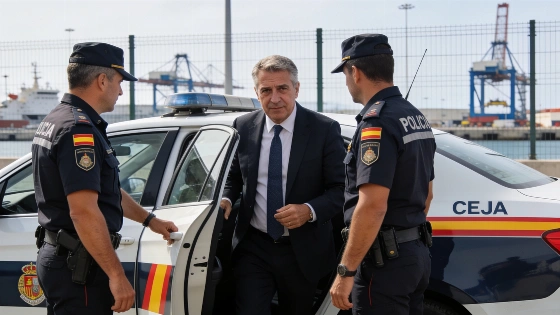
Fernando Grande-Marlaska returns to Ceuta amid a surge of over 70,000 arrivals from Morocco. Tensions with local authorities intensify as the government resists opening the port for migrants. Security reinforcements and new facilities are now in focus.
Spain’s Interior Minister, Fernando Grande-Marlaska, is returning to Ceuta this Thursday for the third time since the border crisis began at the end of July. His visit follows a public dispute with Ceuta’s president, Juan José Vivas, who has refused to allow the city’s port to be used as a migrant reception area. The disagreement has highlighted growing tension between Madrid and local officials as Ceuta tries to cope with more than 70,000 arrivals from Morocco in just a few days.
The government has responded by increasing security and logistical support. Ceuta now has 714 Civil Guard officers and 945 National Police, the highest ratio of security personnel to residents in Spain. A new Temporary Foreigners Attention Centre (CATE) with 400 places is about to open, staffed by 14 identification teams to process arrivals, in addition to the ten teams already working.
Official Spanish statistics report 4,076 people crossed the land border into Ceuta from January 1 to August 31, 2026, not including the mass entries of July 30–31.
Grande-Marlaska’s schedule includes meetings with the government’s delegate in Ceuta, Miguel Ángel Pérez, and senior police and Civil Guard commanders. The focus is to assess the situation and coordinate the next phase of crisis management. During previous visits—one with Prime Minister Pedro Sánchez on July 31, and another on August 13—the government released figures showing over 1,800 unaccompanied minors identified and about 5,000 foreign nationals still in the city weeks after the initial surge.
Behind closed doors, the government is preparing to declassify key reports to support its claim that there were no advance warnings about the scale of the influx. This step is meant to answer criticism from within the cabinet, as Defence Minister Margarita Robles has said that alerts were issued before the crisis. The Interior Ministry maintains that the true scale was not anticipated, and Prime Minister Sánchez has promised more clarity once the documents are released. According to Reuters, a new dispute has broken out within the government over who warned about the crisis and when. The Interior Minister has asked the national police for clarification about a report allegedly linking the mass entry to Moroccan security forces, but police deny such a report exists or that there is evidence of Moroccan involvement.
The political fallout has reached Madrid. The Partido Popular has filed legal action over ministers missing Senate sessions during the crisis, raising the stakes and increasing pressure on the government to show control and transparency. Earlier reports detail this legal move.
Estimates of how many migrants remain in Ceuta vary widely: Reuters reports over 10,000 people still in or near the city, while other sources mention about 5,000, including thousands of minors. This ongoing uncertainty highlights the strain on local infrastructure and the challenges in providing adequate reception facilities.
Reuters
The Interior Ministry says that reinforcements and new facilities are helping stabilize the situation. Still, the refusal to open the port and ongoing disputes with local leaders point to a lack of coordination. The government’s next steps depend on the credibility of its upcoming disclosures and its ability to keep order without losing support from regional partners. Ceuta has become a test of Spain’s crisis management and cooperation between national and local authorities. The coming days will show whether Madrid’s approach can handle both the logistical demands and the political scrutiny surrounding this emergency.