La bola negra, directed by Los Javis, has become a flashpoint after wins at Cannes and Toronto. The film digs into Spain’s past and present, weaving queer stories across generations, and will represent Spain at the Oscars.
When La bola negra took Cannes and won best director, it was clear Los Javis—Javier Calvo and Javier Ambrossi—had made more than a period piece. The film, now Spain’s pick for the Oscars after also winning the Audience Award in Toronto, goes straight at a century of Spanish history. It does this through a queer lens, refusing to let silence or shame shape the story anymore.
The film draws from Alberto Conejero’s play La piedra oscura and Lorca’s unfinished La bola negra. It moves through three timelines: 1932, 1937, and today. Each one shows a different side of Spain’s struggle with sexuality, memory, and trauma passed down through families. The stories connect not just by blood or old papers, but by secrets that linger—secrets that have shaped families and the country itself.
Spain officially selected La bola negra as its submission for the International Feature Film category at the Oscars, a move confirmed by both industry outlets and Netflix Tudum.
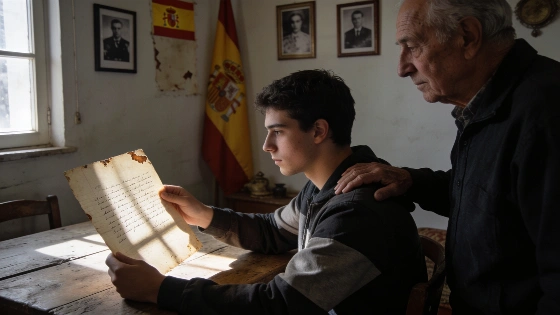
The cast includes Guitarricadelafuente, Miguel Bernardeau, Carlos González, and Milo Quifes, with support from Penélope Cruz, Lola Dueñas, and Glenn Close. The film ties together a soldier guarding Lorca’s companion Rafael Rodríguez Rapún during the Civil War, a young man turned away from a Granada casino in 1932 for being gay, and a grandson in the present who inherits both a family secret and Lorca’s unfinished manuscript. Los Javis don’t smooth out the rough edges. They take liberties with history and go big with visuals. Sometimes it’s obvious or sentimental, but always meant to make viewers think about what Spain remembers—and what it tries to forget.
“That a queer film with three gay leads and a gay love story can reach so many people is significant, but the film is about much more,” Javi Ambrossi said at the San Sebastián Festival. “It’s about humanity, empathy, love, and legacy. Our stories aren’t niche—they’re much bigger.”
Javier Calvo brings it back to his own experience: “I didn’t know how the elders in my community lived. I had to sit down with my grandparents and listen. People died so we could have freedoms, and we don’t honor them. So many love stories have been lost, left unfinished like Lorca’s La bola negra.”
According to RTVE, since 2012, nearly every winner of the Toronto International Film Festival's Audience Award has gone on to receive an Oscar nomination, highlighting the strategic importance of La bola negra's TIFF victory for its awards campaign.
Penélope Cruz, who has a small role but has backed the film, points to its refusal to preach. “The key is that they send a message based on facts, not opinions, about what it means to be on the right side—what it means to respect others. There are lines here, like the final warning, ‘Cuidado que aún nos acechan,’ that still feel chilling in 2026.”
La bola negra hits home with younger viewers by design. Ambrossi says, “Young people want riskier projects. They know when something is fake, when it’s AI, when it’s dubbed. The best thing we can give them is a film made by hand—a group effort. Young people love what’s real, what’s authentic.”
Spain is still dealing with the ghosts of its civil war and years of repression. The film’s success shows that new generations want honesty and complexity in how the country remembers its past. As reported earlier, La bola negra is more than an awards contender—it pushes Spain to face truths it often avoids.
La bola negra doesn’t tie things up neatly. It insists that stories left unfinished—by history, violence, or fear—still matter. In a world where authenticity is often traded for comfort, Los Javis have made a film that won’t compromise. Their work shows the fight for memory, dignity, and visibility isn’t over, and that film can still force a country to face what it would rather leave in the dark.