Spain's proposed tobacco law expands smoking bans to beaches and terraces. Experts say the reform is incomplete without higher taxes and tighter sales controls. The debate now moves to Parliament.
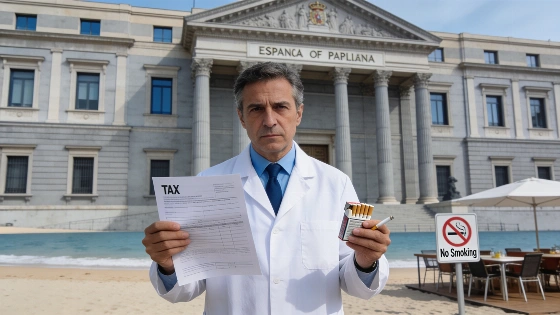
Spain's latest push to tighten tobacco regulations has drawn sharp criticism from leading public health experts, who argue that the government's new law falls short by omitting crucial fiscal and supply-side measures. The draft legislation, which has entered parliamentary debate, aims to prohibit smoking for minors and extend bans to beaches and outdoor terraces. However, Armando Peruga, a prominent epidemiologist at the Instituto Catalán de Oncología and former WHO official, warns that without significant tax hikes and stricter control over tobacco sales points, the fight against smoking will remain incomplete.
Peruga, speaking to EL PAÍS, described the law as a step forward but highlighted key omissions. He pointed out that the proposal does not include plain packaging requirements, a measure initially expected to be part of the reform. More critically, he noted that Spain continues to have some of the lowest tobacco taxes in Europe, making cigarettes more accessible and undermining public health efforts. The responsibility for setting these taxes and regulating the number of licensed tobacco outlets lies with the Ministry of Finance, which Peruga accuses of neglecting its role in tobacco control.
The new law also seeks to align the regulation of e-cigarettes and heated tobacco products with traditional cigarettes, banning their use in all areas where smoking is already prohibited. While Peruga supports this move, he remains cautious about its practical implementation, especially regarding the definition of 'specialized shops' and whether tax parity will be enforced for these products. He stresses that exposure to aerosols from vaping devices, though potentially less harmful than cigarette smoke, still poses health risks, particularly for workers and minors in public spaces.
Industry groups have pushed back, claiming that banning smoking on terraces is an outlier in Europe and could harm the hospitality sector. Peruga rejects these arguments, citing European Union recommendations and Spain's own experience during the pandemic, when temporary terrace bans were implemented without major disruption. He emphasizes that secondhand smoke exposure outdoors can be significant, especially for staff who cannot simply leave the area, making this a workplace health issue as much as a public one.
On the question of whether e-cigarettes reduce harm, Peruga acknowledges that while they may emit fewer toxins than traditional cigarettes, the long-term effects remain uncertain. He also highlights the growing prevalence of dual use—smokers who use both cigarettes and e-cigarettes—which scientific evidence shows increases health risks rather than reducing them.
Critics of the law argue that stricter bans will merely shift smoking to other locations rather than reduce overall consumption. Peruga disputes this, noting that most smokers express a desire to quit and that additional restrictions serve as effective incentives. He also dismisses industry warnings of economic fallout, referencing studies from the 2010 smoking ban that found no negative impact on the hospitality sector and, in some cases, a slight positive effect as non-smokers frequented bars and terraces more often.
Asked why Spain does not simply ban tobacco outright, Peruga explains that tobacco addiction requires a gradual approach to avoid fueling illicit markets and to allow time for both consumers and the agricultural sector to adapt. He calls for a coordinated government strategy that includes fiscal, regulatory, and public health measures to ensure meaningful progress.
The debate over Spain's tobacco law comes amid broader European efforts to curb smoking and protect public health. As reported earlier, the government is also targeting e-cigarettes and outdoor smoking in its reform package, with higher fines and stricter rules under consideration. For more on the scope of these proposed changes, see this overview of the government's planned tobacco restrictions: Spain's move to ban smoking for minors and on terraces.
Spain's approach to tobacco control has evolved over the past two decades, with incremental bans on indoor smoking and advertising. Yet, the country remains a major tobacco market in Europe, partly due to low prices and widespread availability. The current legislative push reflects growing concern over youth vaping and persistent smoking rates among adults. The outcome of the parliamentary debate will determine whether Spain takes a more comprehensive stance or continues to lag behind its European peers in tobacco regulation.