Attempts to revive local bar culture on Barcelona’s Joan de Borbó have failed. Residents and business owners now defend authentic spaces in Barceloneta as tourist crowds reshape the city’s social fabric.
Efforts to restore local bar culture on Barcelona’s iconic Joan de Borbó promenade have hit a wall. Seven years ago, anthropologist and bar owner Sergio Gil tried to open a venue aimed at residents, not tourists, in the heart of the city’s most visited coastal strip. His project was quickly overwhelmed by the area’s relentless tourist flow and commercial interests focused on quick profits and international trends.
Gil’s experience highlights a growing divide in Barcelona’s urban life. While the promenade is now dominated by themed bars, brunch spots, and menus tailored to visitors, authentic local venues are being pushed to the margins. Gil, who now runs La Peninsular in the heart of Barceloneta, describes the area as a last bastion for neighborhood life. He openly admits his attempt to reclaim Joan de Borbó failed, blaming both the overwhelming tourist presence and business partners more interested in exploiting established brands than building community spaces.
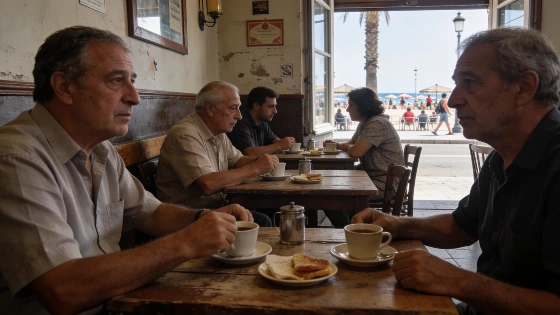
Inside La Peninsular, the contrast is clear. Locals gather for coffee or wine, maintaining traditions that have defined the neighborhood for generations. Gil sees his bar as a “barricade” against the loss of local identity, insisting that only those who respect the area’s culture are truly welcome. He draws a sharp line between residents and the stereotypical “guiri”—a term for tourists who disregard local norms, from walking shirtless to leaving sand in elevators and treating the city as a playground.
According to Gil, the tourist-focused model on Joan de Borbó is now beyond saving. He argues that the tactics used to attract and trap visitors—aggressive street promoters, overpriced menus, and superficial experiences—are not unique to Barcelona but are found in major tourist centers worldwide. This approach, he says, undermines the city’s social fabric and erodes the sense of community that once defined its neighborhoods.
Despite these challenges, Gil remains committed to defending Barceloneta’s local spirit. His bar prioritizes residents and offers a menu based on traditional pantry cuisine, fresh ingredients, and sustainable practices. He sees this as a political act, aimed at preserving authentic urban life rather than turning it into a commodity. The mission, as he describes it, is to protect uncomfortable but vital aspects of local heritage, including anarchist traditions and the multicultural influences that have shaped the area.
Gil also points to the role of immigrant-run bars, especially those operated by Asian families, in maintaining the city’s bar culture. He contrasts these genuine establishments with “neo-taverns” that mimic the look of traditional venues but lack their community roots. For Gil, a real bar is defined by its connection to the neighborhood and its openness to spontaneous encounters, not by curated experiences for outsiders.
The broader context is one of rapid change. Rising property prices, driven by expatriate buyers and the exodus of long-term residents, are transforming Barceloneta and other central districts. Gil insists that his work is explicitly political: defending a type of bar that fosters dialogue, social networks, and a heterogeneous community. He believes that the essence of humanity—our need to connect—still survives in these popular spaces.
This struggle over local identity is not unique to Barcelona. Across Spain, traditional venues and customs are being reshaped by new populations and global trends. For example, Madrid’s popular festivals have seen significant changes as Latin American communities introduce their own traditions, as detailed in this recent analysis of Madrid’s evolving fiestas. The tension between preserving local character and adapting to new realities is now a defining feature of urban life in Spain’s major cities.
Barceloneta’s experience reflects a wider debate about the future of Spanish cities. As tourism and international investment reshape neighborhoods, the survival of authentic local spaces depends on the determination of residents and business owners to defend their traditions. The outcome will shape not only the city’s identity but also the daily lives of those who call it home.