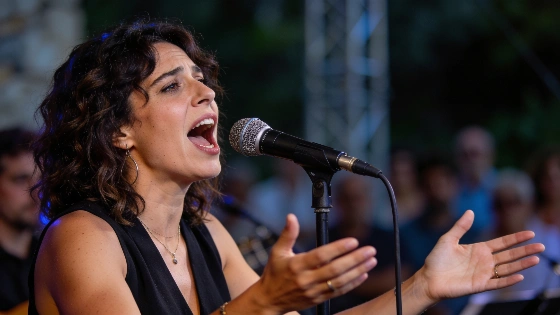
Luz Casal took the stage at Cap Roig, combining her latest album with classic songs. The singer's performance highlighted her interpretative strength and deep connection with the audience.
Luz Casal reaffirmed her status as a leading figure in Spanish pop-rock during her recent concert at the Cap Roig Festival. The event drew attention not only for its musical quality but also for the singer's ability to connect with her audience through a carefully selected repertoire. Casal opened the evening with tracks from her latest album, Me voy a permitir, setting a direct and honest tone that contrasted with the more produced sound of the studio recordings.
Throughout the performance, Casal alternated between new material and her most celebrated classics. Songs like No me importa nada and Besaré el suelo por ti were met with strong reactions from the crowd, especially as she dedicated the former to women in the audience, creating a sense of solidarity and shared experience. Her rendition of Volver a comenzar stood out for its storytelling approach, with the opening verses delivered almost as spoken word, emphasizing resilience in the face of adversity.
The concert also featured notable tributes and reinterpretations. Casal paid homage to Amalia Rodrígues with Lágrima and tackled Bravo, a song from Olga Guillot's repertoire, using her interpretative skills to convey the complexities of emotion and the dangers of sustained hatred. The singer's conviction in these performances underscored her reputation for making each lyric believable and emotionally charged.
Midway through the show, Casal shifted focus to themes of resilience and hope. Her performance of Nada es imposible, inspired by Noah Higón—a jurist and writer living with rare diseases—brought a moment of heightened emotional intensity. Casal's visible admiration for Higón's spirit added depth to the song's message, resonating strongly with the audience.
As the evening progressed, Casal returned to her roots with rock-infused tracks and a series of encores. She included 18 años, her adaptation of Dalida's Il venoit d’avoir 18 ans, a song she rarely performs in Spain, and closed with a sequence that featured Lo eres todo, Negra sombra, Piensa en mí, and Es por ti. The latter, a version of Sau's Boig Per tú, remains a staple in Catalonia and was received with enthusiasm.
Casal's approach at Cap Roig was marked by maturity and confidence, balancing personal expression with audience expectations. Her willingness to revisit both her own classics and reinterpret works by other artists demonstrated a commitment to artistic evolution without losing sight of her roots. The concert's structure, moving from intimate storytelling to collective celebration, highlighted the enduring appeal of her music.
Events like this reflect the ongoing vitality of Spain's live music scene, where established artists continue to draw large audiences and foster intergenerational connections. The Cap Roig Festival, known for its diverse programming, remains a key platform for such performances. This dynamic is reminiscent of how major cultural events, such as the total solar eclipse gatherings described in recent reports on national celebrations, bring communities together through shared experience and emotion.
Luz Casal's concert serves as a reminder of the power of live music to bridge past and present, offering both nostalgia and new perspectives. Her ability to adapt her repertoire while maintaining authenticity ensures her continued relevance in Spain's cultural landscape. The evening at Cap Roig reinforced her position as one of the country's most respected performers, capable of uniting audiences through both familiar hits and bold artistic choices.