Emmanuel Macron says the US-Denmark agreement eases tensions over Greenland. Copenhagen and Greenlandic authorities say it protects Danish sovereignty and Greenlandic self-determination, while Washington presents it as a lasting security arrangement important to NATO and Europe.
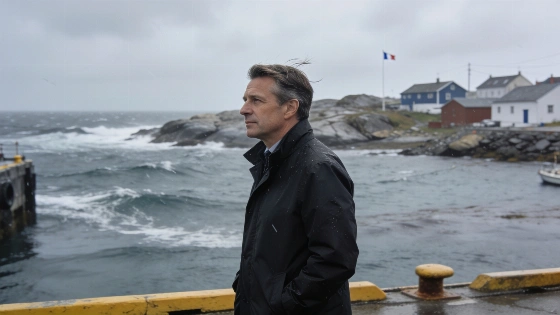
Emmanuel Macron has backed the agreement between the United States and Denmark on Greenland's security. He says it reaffirms Danish sovereignty, respects international law and helps calm tensions. The French president spoke during a visit to San Pedro and Miquelón.
The United States, Denmark and Greenland have all presented the deal as a security framework for the Arctic and North Atlantic. They also say it does not remove Denmark's sovereignty or Greenlanders' right to self-determination, according to BBC reporting and NBC News.
The main dispute is not whether the United States will stay involved in Greenland's defence. It is about how that presence will be defined.
Donald Trump has described the agreement as allowing an indefinite American military presence and permanent US control over the island's security. Denmark describes the same arrangement as shared security under Danish sovereignty.
According to reporting on the draft agreement, only NATO countries would be allowed to establish military bases in Greenland, while sensitive investments would be restricted to NATO and EU countries. The reported provisions are also designed to remain in force even if Greenland’s status changes.
Prime Minister Mette Frederiksen confirmed that Copenhagen had reached the agreement with Washington. She said the text recognises Denmark's sovereignty and territorial integrity. It also acknowledges the right of the Greenlandic people to self-determination.
Her wording places the deal within the constitutional framework of the Kingdom of Denmark. It does not present the agreement as a transfer of authority to Washington.
Macron said the Danish government had told him about the conclusion of the talks several weeks earlier. He called the agreement a step towards conciliation and pointed to joint exercises involving Denmark, Canada and the United States during strategic defence operations.
AFP reported that Macron said the pact confirmed Danish sovereignty and that international law had been respected.
Frederiksen has described the agreement as good for NATO and Europe. Its significance extends beyond the bilateral relationship because the Arctic and North Atlantic are becoming more important theatres of military and strategic competition.
The French president also used the visit to draw a clear territorial line. Donald Trump had published a map that placed the wider region under the United States flag. Macron responded by stressing that San Pedro and Miquelón is French and belongs to France.
The episode showed that the dispute is about more than military access. Symbolic questions of territorial sovereignty are part of it too.
Washington's account focuses on a lasting security role in Greenland. Copenhagen's account puts territorial integrity and self-determination at the centre of the deal. Macron supports the Danish interpretation while still backing cooperation with the United States.
Danish officials say the arrangement will strengthen common security in the Arctic and North Atlantic without transferring sovereignty.
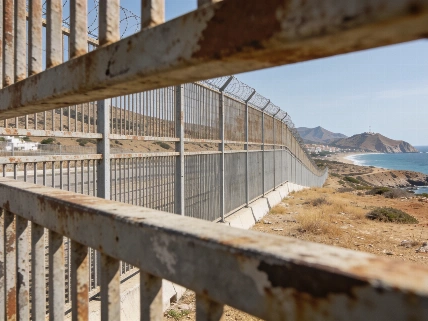
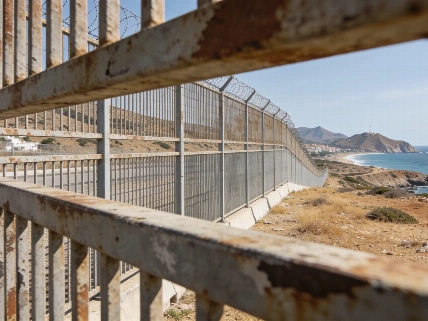
The difference between sovereignty and security arrangements is familiar in European disputes. An earlier report on Ceuta also examined how territorial questions can become politically charged, although the cases are unrelated.
Macron has given the agreement a clear political reading. Cooperation is acceptable when it operates under Danish sovereignty and international law.
That position goes beyond simply welcoming a US security commitment. On the facts presented, the pact does not erase the sovereignty dispute. It sets the conditions under which American forces may remain involved.
The agreement's political weight lies in that balance. Macron has made clear which side of it France considers essential.