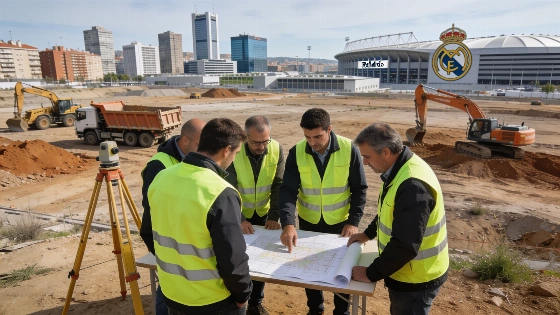
Madrid is set to transform 85 hectares in Valdebebas into a new technology district, with the potential to create nearly 24,000 jobs. The project, still in early planning stages, could reshape the city’s innovation landscape and public spaces.
Madrid’s City Council has taken a decisive step toward reshaping the city’s northern edge, giving initial approval to a sweeping urban plan that would turn 85 hectares of Valdebebas into a major technology district. The project, known as Madrid Innovation District, is expected to generate up to 23,800 jobs once fully operational, according to the latest municipal estimates.
The plan, which covers land owned by Real Madrid, remains in its early stages. The proposal will be open for public comment until the end of September, after which it must pass through the City Council’s plenary session and secure final approval from the regional government. Construction is not yet authorized, and no hiring processes have begun.
What the Project Involves
The targeted area sits between the Hortaleza and Barajas districts, adjacent to Real Madrid’s existing Ciudad Deportiva. Of the club’s 120 hectares in Valdebebas, 35 are already dedicated to sports facilities, while the remaining 85 are earmarked for the new tech campus. The revised plan would increase buildable space to 532,550 square meters—an expansion of 172,550 square meters over current zoning.
The Madrid Innovation District is envisioned as a mixed-use campus, combining offices, technology firms, research centers, training spaces, and support services. Key focus areas include artificial intelligence, data science, biotechnology, and sports sciences. The project also anticipates involvement from universities, research organizations, entrepreneurs, and major international companies.
Education and training are set to play a central role, reflecting the growing importance of AI and digital skills in the job market. The campus will be designed as a green, pedestrian-friendly environment, with bike lanes, electric vehicle infrastructure, and landscaped public spaces. Its location offers proximity to Adolfo Suárez Madrid-Barajas Airport, IFEMA Madrid, the Valdebebas transport hub, Hospital Enfermera Isabel Zendal, and the planned Ciudad de la Justicia.
Timeline and Economic Impact
According to the city’s schedule, urbanization works could begin between 2028 and 2030, with building construction starting in 2029 and continuing through 2035, provided all regulatory hurdles are cleared. The most recent municipal documentation estimates the investment required for the campus at over €2 billion, with an annual contribution to Madrid’s GDP of €1.2 billion once the district is fully active.
Earlier projections from the regional government and consulting firm PwC suggested the project could attract up to €8.5 billion in foreign investment and create around 25,000 skilled jobs. However, the latest figures from the City Council set the employment target at 23,800, tied primarily to scientific, educational, healthcare, and technology sectors. These are not immediate vacancies; actual hiring will depend on which companies, universities, and research centers ultimately establish themselves in the district.
Public Benefits and Urban Integration
One of the plan’s key features is the transfer of more than 200,000 square meters of land to the city for public use. Of this, approximately 166,000 square meters will become green spaces, extending the Metropolitan Forest and creating a new linear park along the Arroyo de la Plata. Another 35,000 square meters are reserved for municipal facilities focused on innovation and technology.
The urban redesign also aims to improve pedestrian routes, landscape connections, and open spaces, reducing the current separation between Valdebebas and its surroundings. The land transfer is contingent on the successful completion of the planning process, which remains ongoing.
As the Madrid Innovation District moves through its approval stages, it stands as one of the city’s most ambitious urban and economic projects in recent years. If realized as planned, it could significantly boost Madrid’s profile as a European hub for technology and research, while delivering new public amenities and green areas for residents.