Madrid’s Popular Party leadership reaffirms support for Móstoles mayor Manuel Bautista after his indictment for alleged sexual and workplace harassment. Calls for his resignation intensify as the case heads to court.
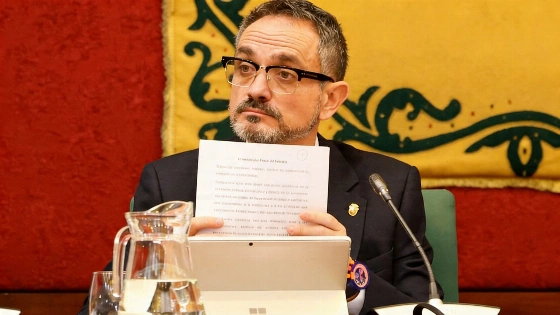
The leadership of Madrid’s Popular Party (PP) has publicly reaffirmed its support for Manuel Bautista, the mayor of Móstoles, following his formal indictment on charges of alleged sexual and workplace harassment against a former party councillor. The case, which has drawn significant attention in the region, has prompted renewed debate over political accountability and internal party dynamics.
Alfonso Serrano, secretary general of the PP in Madrid and a key figure in the party’s regional structure, responded to questions from the press with repeated and emphatic affirmations of support for Bautista. Serrano, leaving a Nueva Economía Fórum event at the Four Seasons Hotel, avoided addressing whether Bautista should resign, instead redirecting focus to national political controversies involving the central government. His remarks underscored the party’s current strategy of closing ranks around the embattled mayor, even as external pressure grows.
Other senior PP figures echoed this stance. Carlos Díaz-Pache, the party’s spokesperson in the Madrid Assembly, described the support as “absolute.” Meanwhile, Isabel Díaz Ayuso, president of the Community of Madrid, declined to comment when approached after her appearance at the same event. The party’s unified front comes despite the gravity of the allegations and the upcoming legal proceedings.
The judicial process is set to intensify in the coming months. The judge of Court No. 2 for Violence Against Women in Móstoles has summoned Bautista to appear as an investigated party on October 9. Five witnesses, requested by the private prosecution, are scheduled to testify on October 23 and November 6. The case centers on accusations from a former PP councillor, who alleges that Bautista made repeated unwanted advances and, after her refusal, subjected her to professional isolation and humiliation, culminating in the removal of her official responsibilities.
Francisco Martín, the government delegate in Madrid, has renewed calls for Bautista’s resignation, citing the need for “responsibility, exemplary conduct, and decency.” Martín argued that the mayor should have stepped down months ago when the case first became public, and extended criticism to Isabel Díaz Ayuso and other PP leaders for what he described as ongoing protection of Bautista while the alleged victim was marginalized.
According to documentation reviewed by EL PAÍS, the former councillor initially used the PP’s internal channels to report the alleged harassment, holding two meetings with regional party leaders. During these meetings, she was reportedly pressured not to take the matter to court. Serrano, who previously defended Bautista’s innocence at a national PP press conference, characterized the recording of private conversations by the complainant as an act of bad faith. The case has also implicated Serrano, as he is said to have advised the alleged victim against pursuing legal action, warning it could harm her.
The controversy surrounding the PP’s handling of internal disputes and allegations of misconduct is not unique to Madrid. Similar tensions have surfaced in other regions, as seen in the recent internal crisis within the PP’s Valencia branch, where leadership struggles and calls for party congresses have highlighted broader challenges for the party’s national leadership. For example, recent developments in Valencia have underscored the difficulties the PP faces in managing internal dissent and maintaining public trust amid ongoing scandals.
In Spain, allegations of sexual harassment and abuse of power within political parties have increasingly come under public scrutiny, especially as legal frameworks and societal expectations evolve. The outcome of the Móstoles case may set important precedents for how such accusations are handled within party structures and could influence future approaches to internal complaints and political accountability. The next court dates are expected to draw significant attention, both locally and nationally, as the PP’s response continues to be closely watched.