San Juan celebrations in Las Moreras unfolded under intense police presence. Recent violent incidents led to strict entry checks and heightened security. Attendance dropped as heat and safety fears changed the festival's atmosphere.
San Juan night in Valladolid's Las Moreras district was transformed this year by an unprecedented police deployment, following a series of violent incidents linked to youth gangs. The city authorities responded to the May 17 attacks—where three young people were stabbed in the area—by doubling security forces and imposing strict access controls for the traditional festival on June 23.
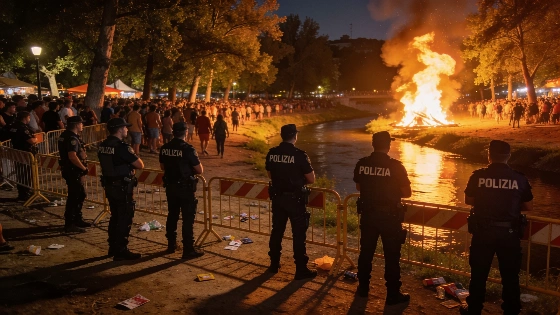
Attendees faced rigorous checks at every entrance to the riverside park, with police and private security demanding official identification and conducting random searches. The operation included both uniformed and plainclothes officers, as well as canine units focused on detecting drugs. The city’s Security Board had classified several underpasses and bridges as high-risk zones, sealing them off to prevent potential stampedes or hidden threats. These measures were reinforced by a 50% increase in the budget for private security staff.
In the hours leading up to the event, police swept the area for hidden weapons, a tactic prompted by previous incidents where gangs had concealed knives and machetes in bushes to evade detection. This year, officers discovered a kitchen knife and two balaclavas in the San Quirce area before nightfall, underscoring the seriousness of the threat. The head of the Municipal Police, Julia González, confirmed that the number of officers on duty had more than doubled compared to previous years, with close coordination between local and national police forces.
City councillor Alberto Cuadrado (Vox), responsible for Security and Cleaning, was present throughout the night, emphasizing the gravity of the gang problem in Valladolid and criticizing attempts to downplay the issue. He pointed to recent fatal incidents, including the killing of Esteban Rubio and the stabbing of a minor in Laguna de Duero, as evidence that the threat is real and ongoing.
Festival-goers noticed the difference. Traditional free movement along the riverbank was replaced by orderly queues and visible tension. As the evening progressed, the demographic shifted: families with children left early, while groups of young people carrying coolers and drinks arrived. The city acknowledged the challenge of controlling alcohol consumption among minors, admitting that preventing people from bringing bags was nearly impossible.
Despite the oppressive heat—classified as a tropical night by meteorologists—and an official orange alert, the party continued. Electronic music dominated the main sports courts, with local DJs drawing crowds, while a second stage hosted a mix of rhythms curated by the Coordinadora de Peñas and the Association of Hospitality. The bars filled quickly, and many sought relief in the Pisuerga river, as the heat and humidity intensified the festive mood.
At midnight, the official bonfire was lit, watched over by Civil Protection, Red Cross, and fire service volunteers. The flames, reflected in the river, marked the ritual transition to summer, but this year the focus remained on security and the visible impact of recent violence. By the end of the night, no major incidents had been reported, and medical interventions were limited to routine festival cases.
However, the environmental cost was clear by dawn. As music stopped at 3 a.m. and cleaning crews began work at 6, the familiar sight of plastic bags, cups, and litter covering the sand and grass returned—despite lower attendance, attributed to both the heat and lingering safety concerns. Councillor Cuadrado predicted that hundreds of containers would be emptied, but the ground would still be left strewn with waste.
San Juan in Las Moreras has long been a highlight of Valladolid’s summer calendar, but this year’s event highlighted the growing challenge of balancing tradition with public safety. The city’s response reflects a broader trend in Spain, where local authorities are increasingly forced to adapt festivals and public gatherings in response to security threats. For context, the issue of public figures and their choices—such as Queen Letizia’s recent appearance in a reused Dries Van Noten dress at a Madrid event—can also signal changing attitudes in Spanish society, as seen in this recent report on royal wardrobe trends.
Valladolid’s experience this San Juan may serve as a reference for other Spanish cities facing similar challenges. The combination of heightened security, environmental concerns, and shifting public expectations is likely to shape the future of large-scale celebrations across the country.