Juan José Imbroda is urging residents to fill Plaza de España for Felipe VI and Letizia on 14 October. The confirmed itinerary gives the royal visit a formal role beyond the planned public welcome.
At 11:45 on 14 October, Felipe VI and Letizia are due at the Assembly of Melilla for the first formal stop of their visit.
The monarchs will meet representatives of the autonomous government and hear about the city's particular circumstances. Later, at 16:15, they are scheduled to visit CEIP Pintor Eduardo Morillas. The programme ends that day with a 17:45 meeting at the Melilla Puerto hotel, where the king will deliver a speech to representatives of local society.
Felipe VI and Queen Letizia's visit to Melilla on 14 October will be their first official visit to the autonomous city since the king's accession in 2014.
Juan José Imbroda has called for a large public welcome in Plaza de España. He wants residents to repeat the reception given to Juan Carlos I and doña Sofía nearly twenty years ago. The official programme confirms the Assembly, the school and the hotel meeting, but it does not independently establish how large the gathering in the square will be.
Imbroda has tied the appeal to what he describes as Melilla's unquestionable Spanish identity. He places that identity in a history dating from 1497 and says the visit will give residents a chance to reaffirm their attachment to the Head of State and the national project. Those are statements attributed to Imbroda, not independently confirmed findings.
His political framing gives attendance in the square a meaning beyond a ceremonial welcome.
Imbroda also says an enthusiastic reception would project a hopeful present and a positive future while showing the historical relationship between the Spanish monarchy and Melilla. EFE and other Spanish media have confirmed the institutional itinerary. Their reporting establishes a formal programme rather than only an appearance before a crowd.
The royal trip will begin in Ceuta on 13 October, where Felipe VI and Letizia are due to spend the night before travelling to Melilla the following day. It will be the first time in democratic Spain that a head of state spends the night in Ceuta.
The overnight stay in Ceuta adds a separate layer of symbolism to the journey. The previous royal visit to both autonomous cities came in 2007, when Juan Carlos I and Queen Sofía stayed in Málaga. That trip contributed to a diplomatic crisis with Morocco. The current visit comes amid migration pressures and continuing sensitivities around the border with Morocco.
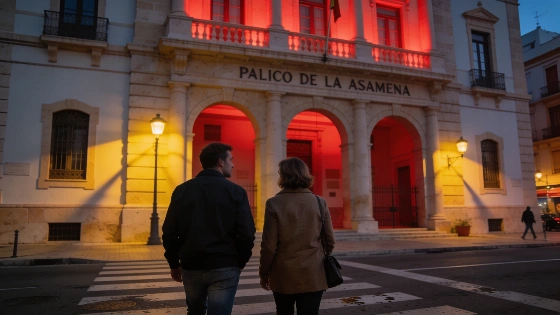
Preparations are visible at the Palacio de la Asamblea. The building scheduled to host the first stop has been illuminated in Spain's red and yellow, with the lights due to remain until the day after the monarchs leave. The detail appears in the original account, but independent reports confirming the official programme do not separately verify it.
A recent Brigitte Macron visit to Madrid ended at the French ambassador's residence. Melilla's programme places the autonomous authorities and a school visit alongside the meeting with local society and the response to Imbroda's call in the square.
That call is the main variable still unresolved. The confirmed schedule sets out the royal couple's movements, while the authorities' appeal seeks a visible public reception on 14 October.
Imbroda wants the formal itinerary to become a collective demonstration of loyalty and belonging. Prime Minister Pedro Sánchez is not expected to accompany the monarchs. Elma Saiz, the minister for Inclusion, Social Security and Migration, has said she will join the king and queen during the journey on 13 and 14 October, representing the central government.
The trip is taking place against a backdrop of migration and border tensions. Independent reporting has linked the journey to that political context, while the official schedule gives the Crown a chance to hear directly from authorities and civil society in both autonomous cities.