Migrants removed from settlements in Ceuta say officials promised registration at reception camps before buses took them to Morocco. Their accounts challenge the official classification of 1,823 returns as voluntary.
At El Trampolín beach, the operation began on Sunday morning. Omar says soldiers and security officers surrounded the migrants and told them their fingerprints would be taken before they were moved to camps.
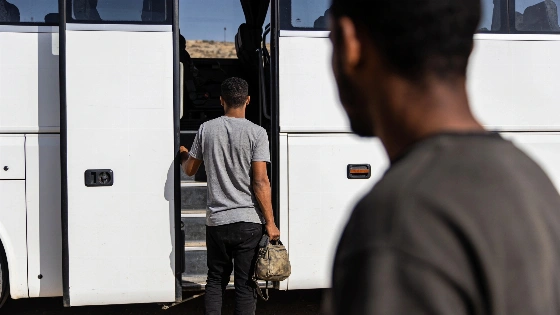
The buses left the area. According to Omar, they bypassed the CATE and went directly to the frontier. El Mundo reports that several people were told they would be registered and transferred to camps before being driven to Morocco.
More than 70,000 people arrived from Morocco in Ceuta on July 30–31, leaving temporary settlements along the coast, including a camp of more than 500 migrants at El Guano.
The stated destination shaped the decision to board. Omar says Spanish agents told the group that Morocco had reached an agreement with Spain to return all the migrants. He says he did not choose to return and believed the bus was taking him to a reception facility.
The accounts surfaced after migrants were removed from several settlements in the autonomous city. The episode followed the clearing of El Guano, Ceuta’s last major migrant camp, described in an earlier camp report. Testimonies now focus on what happened after people were taken away from those sites.
According to RFI, citing Spain’s Interior Ministry, more than 350 officers from different police units took part in the El Guano operation. It was described as the fifth such operation in Ceuta in several weeks.
Crossing the border did not end the journey. Omar says Morocco’s gendarmerie transported the group to cities far from the places where they had lived before reaching Spain. The process involved one transfer from the settlement to the frontier, followed by another from the frontier to distant Moroccan cities.
The Spanish government says people removed from the settlements were taken in small groups to the CATE for identification, fingerprinting and nationality checks. RTVE reported that the stated options were either voluntary return at the Tarajal crossing or registration at the CATE followed by accommodation, leaving the disputed issue of what destination was actually communicated before boarding.
Two other migrants interviewed by El Mundo describe a similar route. They say they boarded buses believing they were heading to the CATE, then discovered they had been taken to the border. Both ended up hundreds of kilometres from their original cities in Morocco.
The testimonies do not show that all 1,823 cases followed the same path. They do show a sharp conflict between the official label and the experience described by at least three migrants. A return cannot be called voluntary when a person is told the bus is going to a camp and is instead taken across the border.
The government’s wider figures extend beyond the 1,823 returns linked to the operation described by the migrants. Torres said that 11,026 people had returned to Morocco since August 10: 10,513 were classified as voluntary returns and 513 as expulsions. RTVE reported that 2,783 departures took place during the nine days before October 8. That period coincided with large-scale beach operations, including the action at El Trampolín.
Official statements record the totals but do not provide, for each person, details of the information given, written consent, the place of registration or the circumstances of boarding. The dispute could prompt scrutiny of identification procedures and access to asylum. It could also affect the legal classification of those returns.
If migrants were told they were going to the CATE but were taken to the border without informed consent, the two situations cannot be treated as identical in official records.