Morocco’s king has issued his first public message since the Ceuta crisis. He warned that cooperation with Spain cannot face pressure, threats or blackmail before Felipe VI’s planned visit.
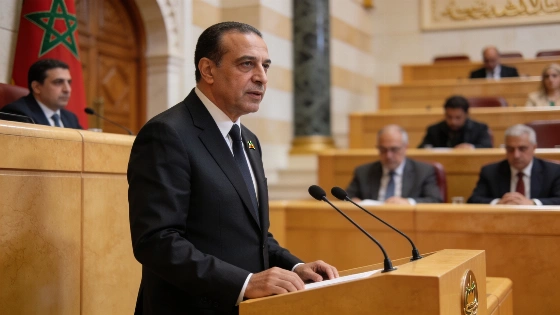
Mohamed VI delivered the warning from Parliament as Felipe VI prepared to visit Ceuta and Melilla the following week.
It was the Moroccan king’s first public address since the dispute. He condemned what he called irresponsible statements from political and media sectors in Spain, drawing a firm boundary around cooperation between the two countries.
Felipe VI's planned visits to Ceuta on 13 October and Melilla on 14 October would be his first official visits to both cities since he became king in 2014.
The planned royal trip was not mentioned directly. Its timing still puts the speech at the centre of the bilateral agenda. Mohamed VI said relations with Spain cannot be subjected to pressure, threats or blackmail.
The wording carried extra weight because the speech opened the parliamentary session after Morocco’s recent elections. Mohamed VI used the occasion to address the dispute while marking the start of a new legislative period.
According to reports by Spanish and Moroccan media, the immediate background was the July migration crisis. Estimates of arrivals in Ceuta ranged from around 70,000 to more than 80,000. The final figure requires confirmation against official statistics.
There was no softer formulation to dilute the point. The king described the partnership with Spain as a sovereign choice and a voluntary commitment. He accused certain political and media circles of instrumentalising the events in Ceuta.
The speech also came as Morocco began forming its next government. Fátima Ezzahra Mansouri, the prime minister designated by the king, appears to be moving towards a centre-left coalition, according to political analysts cited by the Moroccan press.
On Wednesday night, Mansouri met Nizar Baraka, secretary general of the nationalist Istiqlal Party. The party holds 65 deputies, and the meeting opened a second round of negotiations with parliamentary parties.
The proposed coalition of PAM, Istiqlal, USFP and PPS would control 207 of the 395 seats in parliament, nine more than the 198 needed for an absolute majority. The arithmetic gives the coalition talks a workable parliamentary basis, although it does not by itself settle the negotiations.
Mansouri leads the Party of Authenticity and Modernity, known as PAM. The centrist and liberal party was the strongest force in the legislative election, winning 97 of the 395 seats contested and taking a central role in coalition talks.
Istiqlal won 65 seats. The USFP secured 26, while the PPS took 19.
That domestic process forms the wider setting for the king’s intervention. Rabat was opening negotiations over a new government as its political leadership established the priorities of the new legislature.
For Spain, the immediate point is narrower. Morocco is publicly framing the bilateral relationship as cooperation that cannot be dictated by pressure. Mohamed VI also argued that the existing framework is constrained by outdated legal provisions and court decisions that do not reflect conditions on the ground, particularly the difficulties surrounding the return of unaccompanied minors.
An earlier report noted that Spain’s political agenda was already marked by sharp disputes. This statement concerns the relationship with Morocco rather than Spain’s domestic institutions.
Mohamed VI did not announce a change to Felipe VI’s visit. He did not cancel cooperation or set out a new measure. The available material contains no confirmation of a formal rupture in cooperation or new official sanctions by either country.