Mónica Oltra re-enters the political scene in València, confirmed as Compromís candidate. Her first major rally, joined by Gabriel Rufián, signals a shift in campaign strategy and public expectations.
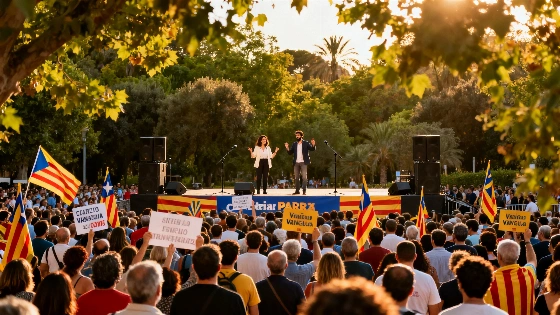
Mónica Oltra has officially rejoined the political arena in València, making her first major public appearance since being confirmed as Compromís's candidate for mayor. The event, held at the Cabecera Park's agora, drew more than 2,000 attendees and marked a significant moment for the city's political landscape. Oltra was joined by Gabriel Rufián, whose presence added national visibility to the rally and underscored the broader implications of her return.
After several years away from frontline politics, Oltra's comeback has been carefully managed, with only a handful of public appearances, including an interview on Onda Cero and a visit to El Intermedio. Her speech in València, however, was her first large-scale engagement since her candidacy was ratified. The rally was closely watched for signs of how her message and political instincts might have evolved during her absence.
Oltra used the occasion not only to announce her return but to set the tone for her campaign. She focused on themes of hope and the redistribution of wealth, positioning herself as a candidate ready to address both local and broader social challenges. Her remarks emphasized the need for a more humane city, prioritizing community, shared spaces, and quality of life over consumerism. She referenced figures like Elon Musk to highlight concerns about wealth concentration and cited Zohran Mamdani as an example of new municipal left-wing leadership.
While Gabriel Rufián addressed the fragmentation of the left and the rise of the far right with a tone of indignation, Oltra chose to highlight optimism and collective action. She spoke openly about personal challenges and the importance of recovering hope, drawing on humanist traditions reminiscent of leaders like Pepe Mujica. Her approach contrasted sharply with Rufián's, signaling a deliberate shift in campaign messaging.
The rally comes at a time when the PSPV is struggling to channel public dissatisfaction following recent events such as the DANA management and an education strike. This context gives Compromís, and Oltra in particular, a unique opportunity to capitalize on shifting political dynamics in València. The ongoing negotiations over which parties will join the project and under what electoral formula remain unresolved, adding further complexity to the race.
Oltra's return has sparked renewed interest in the city's political future. Her ability to connect with diverse audiences and shape public debate was evident at the rally, where she transformed personal vulnerability into a campaign strength. The event also highlighted the importance of narrative in modern politics, as Oltra seeks not just to return, but to build a story of potential victory.
For context, recent Spanish political developments have often been accompanied by public statements and personal narratives, as seen when Paula Badosa addressed her split with Stefanos Tsitsipas, a situation that drew significant attention and can be explored in more detail through this recent report on high-profile public comebacks.
València's political scene is now closely watching whether Compromís and Oltra can learn from past mistakes and convert renewed hope into a majority. The outcome of ongoing coalition talks and the campaign's ability to address local concerns will be decisive in shaping the city's direction ahead of the next elections. As of 2026, València remains a focal point for broader trends in Spanish municipal politics, where leadership style and narrative can be as influential as policy proposals.