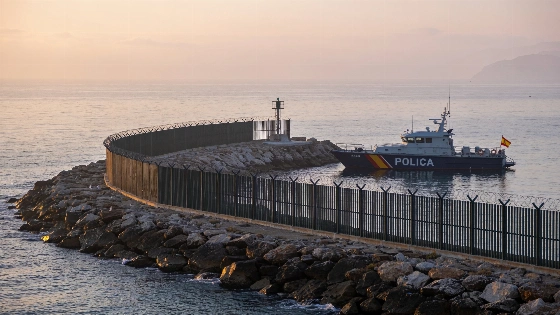
Pedro Sánchez praised Morocco's security deployment at Ceuta and Melilla after preventive measures stopped a renewed mass-entry attempt on 23 September. The move followed July's far larger crisis and renewed debate over border control, migrant screening and Spain's responsibility for reinforcing the enclaves.
Moroccan forces stopped a new mass-entry attempt toward Ceuta and Melilla on Wednesday, 23 September 2026, as Morocco held legislative elections. Pedro Sánchez praised the operation from New York. Thousands of migrants were still in Ceuta after the July assault. His comments came one day after he said Morocco's border controls had failed during the incidents of 30 and 31 July.
The Spanish prime minister now wants the dispute judged by results, not diplomatic language. He said his earlier criticism was not meant as a tougher message to Rabat. The real test, he argued, was whether the border controls worked. In late July, they did not. During the latest alert, he said, they did.
By the afternoon of 23 September, no mass entry attempt had been recorded in Melilla, although heightened monitoring remained in place along the border area.
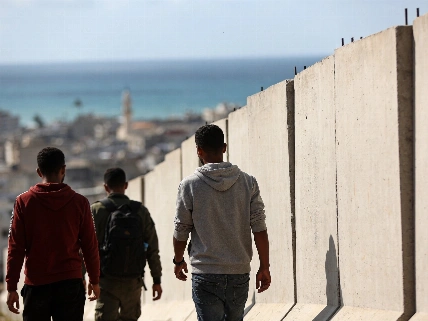
The alert began with messages on social networks calling for another attempt to enter both autonomous cities. Spain's Foreign Ministry and Interior Ministry coordinated with Rabat. Moroccan authorities sent a large police force to the borders of Ceuta and Melilla. Sánchez said the operation deserved public recognition in Spain, including from politicians who readily criticise Morocco but are less willing to acknowledge a concrete response.
The response began before Wednesday.
Sánchez linked the latest operation to measures taken on 15 August, after similar online messages appeared. He also said Moroccan armed forces and gendarmerie had already been deployed on 30 July. Madrid is presenting the recent prevention effort as part of an ongoing Moroccan response, rather than as a move made only for the elections. Spanish Foreign Minister José Manuel Albares said the September calls had not reached the scale seen before the crisis in late July.
The Spanish Embassy in Morocco publicly warned that irregular entry through Ceuta or Melilla does not automatically grant a right to remain in Spain or to move freely through the European Union. The message was issued as new rumours of a mass crossing circulated online.
The Spanish government also accepts that the responsibility does not lie entirely across the border. Madrid has announced 170 million euros to strengthen controls in Ceuta and Melilla. The government says work on those measures began before the latest confrontation. It is defending two positions at once: Morocco must keep effective controls in place, and Spain must reinforce its own frontier capacity.
Inside Ceuta, attention has shifted from the attempted entry to the treatment of people who arrived during the first assault. Sánchez said the city was handling relocation and screening properly. The procedures are meant to establish who may qualify for international protection and who does not. He said migrants could be treated humanely while order and the law were maintained.
That distinction sits at the center of the political dispute. During meetings in New York with European and other international leaders, Sánchez said he had found sympathy for Spain and for the migrants in Ceuta. He also rejected the description of a 10-year-old child as an "invader", a term he attributed to some political parties.
The border issue has already led to arrests and expulsions alongside mass-entry alerts. The earlier Ceuta arrest involved a Moroccan man convicted of terrorism. That case is separate from the events described by Sánchez. It shows why security controls in the enclave remain a constant operational issue.
The July crisis was far larger than the September alert. Reuters reported that more than 72,000 people broke through from Morocco into Ceuta at the end of July. Spanish authorities estimated that about 12,000 people, including minors, remained in the enclave. Pressure from the European Parliament also increased after a resolution described the late-July events as a mass breach of the border. Figures cited in reporting on that resolution put the number of crossings on 29-31 July at about 80,000, with up to 11,000 people still in Ceuta.
Moroccan authorities have rejected responsibility for the July events. They pointed to smugglers' networks and disinformation. They also said they were ready to receive people who crossed irregularly, including minors and nationals of third countries. Reuters said the crisis affected the wider European migration debate and strengthened far-right political narratives even as overall migrant arrivals in the European Union fell.
Sánchez is not withdrawing his criticism of the July failure. He is pairing it with recognition of Morocco's later deployment. Spain says it needs stronger controls while defending screening and humane treatment for migrants already in Ceuta. Morocco's actions prevented the threatened renewed mass entry on 23 September, but Madrid still considers its own 170-million-euro reinforcement necessary. The message from the government is direct: cooperation will be judged by what happens at the frontier, not by diplomatic language.