Spain's National Court has asked the Guardia Civil to clarify if any prior warnings were received before over 70,000 migrants entered Ceuta. The investigation focuses on possible missed alerts and the response of border forces.
The National Court has formally requested the Guardia Civil to clarify whether it received any advance warnings about the unprecedented mass entry of migrants into Ceuta from Morocco. This move comes after more than 70,000 people crossed the border, overwhelming Spanish security forces and triggering a judicial investigation into the handling of the crisis.
The inquiry was launched following a complaint from the political party Iustitia Europa, which called for an investigation into alleged crimes against state security, facilitation of illegal immigration, human trafficking, criminal organization, and failure to pursue criminal acts. Central to the case is whether Spanish authorities had any prior indications or alerts that could have allowed for better preparation at the border, where personnel were quickly outnumbered by the influx.
Interior Minister Fernando Grande-Marlaska has maintained that the Centro Nacional de Inteligencia (CNI) did not issue any specific warnings about a mass arrival in Ceuta. However, he acknowledged that there were general notifications in the days leading up to the incident, suggesting a possible seasonal increase in irregular maritime entries, which might have been influenced by a recent Supreme Court ruling prohibiting immediate returns of migrants who enter by swimming.
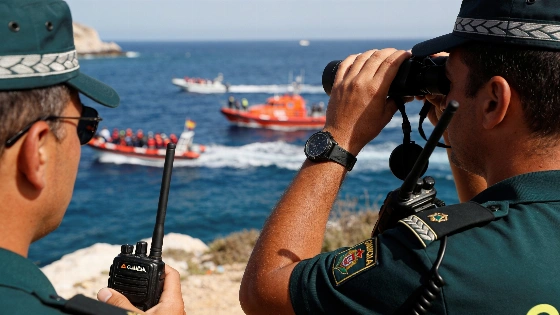
Judge María Tardón, presiding over Central Court of Instruction No. 3, has asked the Guardia Civil’s intelligence division for detailed information on the most critical days of the crisis—July 30 and 31. The court seeks specifics on rescue operations in Spanish territorial waters, the identities and circumstances of those found, and, in the case of fatalities, the cause and date of death. So far, 77 deaths have been recorded, with 20 bodies recovered on the first day and around 40 more the next. The deceased are currently held in a refrigerated hangar at the old military hospital in Ceuta, as authorities work with Morocco to identify them.
This is not the first step in the ongoing investigation. Earlier, the judge requested a report from the National Police on whether the mass entry was a coordinated action by a criminal group. The court’s aim is to determine whether it has jurisdiction to pursue the alleged crimes reported by Iustitia Europa, which is also involved in other high-profile cases.
The Ceuta crisis has drawn national and international attention, with local officials calling for emergency measures and a unified response. As previously reported, the president of Ceuta demanded a national emergency declaration as arrivals surged, highlighting the strain on local resources and the urgent need for coordinated action.
Ceuta, a Spanish enclave on the North African coast, has long been a focal point for migration from Morocco and sub-Saharan Africa. The recent events represent one of the largest single surges in recent history, raising questions about border management, intelligence sharing, and the legal framework governing migrant returns. The Supreme Court’s July decision on “hot returns” has added complexity, as authorities can no longer immediately expel those who enter by sea. The outcome of the National Court’s investigation may have significant implications for Spain’s migration policy and the operational protocols of its border forces.