Transport Minister Óscar Puente has sharply criticized Javier Negre's greeting to King Felipe VI in Colombia. The incident triggered a heated exchange and renewed debate over the monarchy's public image.
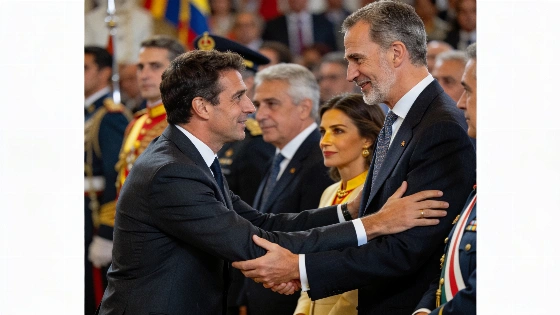
Transport Minister Óscar Puente has publicly condemned the recent encounter between Javier Negre, president of EDATV, and King Felipe VI during the Colombian presidential inauguration. Puente described the moment when Negre approached the monarch for a photo as an 'absolute ignominy', sparking immediate controversy in both political and media circles.
The incident, captured on video and widely shared on social media, shows Negre greeting King Felipe VI and requesting a photograph, which the king agreed to. The setting was the official ceremony for Colombia's new president, adding further visibility to the exchange. Puente's reaction was swift and direct, labeling the situation as unacceptable and ignominious.
Javier Negre, known for his critical stance towards Queen Letizia, responded to Puente's remarks by attacking the government led by Pedro Sánchez. Negre argued that the real disgrace was not his interaction with the king, but rather the king's obligation to greet representatives of what he called a 'corrupt government' that, according to him, obstructs the monarch's visits to Ceuta. In his response, Negre positioned himself as the owner of the most viral political media group in Hispanic America, defending his right to meet the king.
Puente, in turn, dismissed Negre's arguments, stating that the only truth in Negre's statement was that he is 'a virus'. The exchange quickly gained traction online, fueling debate over the boundaries of protocol, the role of media figures in official events, and the monarchy's relationship with controversial personalities. The episode has also reignited discussions about the public image of the royal family and the government's handling of such situations.
This is not the first time the relationship between King Felipe VI and media figures has drawn public scrutiny. In a related development, a previous report examined the fallout after the king appeared in a photo with Javier Negre in Colombia, highlighting the ongoing debate over the monarchy's associations and the influence of polarizing media leaders. For further context on the broader implications of such encounters, see the analysis at this detailed report on the king's photo with Javier Negre.
Spain's monarchy has faced increasing challenges in recent years, with public opinion divided over its role and relevance. The presence of media personalities at official events often raises questions about access, legitimacy, and the potential impact on the institution's reputation. While the royal household typically maintains a neutral stance in public interactions, incidents like this highlight the delicate balance between openness and the need to protect the monarchy's image. The government's response, as seen in Puente's comments, reflects ongoing tensions between political leaders and figures from the media landscape. As debates continue, the episode underscores the complexities of protocol and public perception in Spain's evolving political environment.