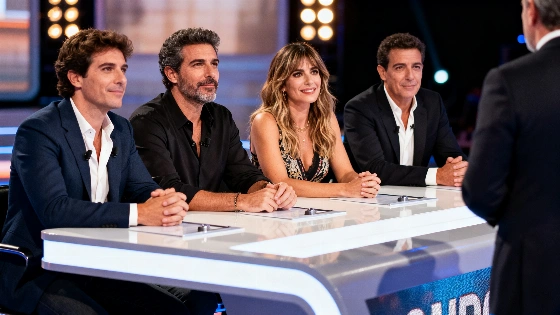
Pasapalabra on Antena 3 continues to attract major names from Spanish culture and television. The show’s blend of general knowledge and family entertainment keeps it at the forefront of Spanish TV. This episode features four prominent guests.
Pasapalabra, broadcast on Antena 3 and hosted by Roberto Leal, has reinforced its status as one of Spain’s most resilient television formats. In a landscape where audience attention is increasingly divided, the show’s formula—mixing general knowledge, quick thinking, and family-friendly entertainment—continues to deliver strong results. The latest episode stands out for assembling a guest lineup that includes Pastora Vega, Máximo Huerta, Goyo Jiménez, and Marta González de Vega, all of whom are well-known figures in Spanish culture and media.
Pastora Vega brings decades of experience in Spanish cinema, theatre, and television. Her career, which began in the 1970s, has made her a familiar face to several generations. Notably, her roles in long-running series such as Cuéntame cómo pasó have connected with a wide audience, while her film work under prominent directors has further established her reputation for versatility.
Máximo Huerta, another guest, is recognized for his multifaceted career as a journalist, writer, and television presenter. He first gained national attention as part of Informativos Telecinco, later expanding his profile through entertainment programs like El programa de Ana Rosa. In recent years, Huerta has also achieved success as a novelist, with works such as La noche soñada earning critical acclaim and awards, including the Premio Primavera de Novela.
Goyo Jiménez is among Spain’s most prominent comedians, known for his stand-up performances and his distinctive style that often contrasts Spanish and American cultures. His television breakthrough came with El club de la comedia, where he became a staple of the national comedy scene. Jiménez’s ability to fill theatres and his appearances in various entertainment formats have cemented his status as a leading humorist and communicator.
Marta González de Vega completes the guest list, recognized for her work as an actress, screenwriter, and playwright. She has made a significant impact in comedy, both on stage and behind the scenes. As a screenwriter, her contributions to the successful film series Padre no hay más que uno, directed by Santiago Segura, have resonated with family audiences and contributed to the franchise’s popularity in recent years.
The continued success of Pasapalabra highlights the enduring appeal of quiz formats that combine knowledge and entertainment, even as Spanish television evolves. The show’s ability to attract high-profile guests from diverse cultural backgrounds reflects its broad reach and relevance. This dynamic is reminiscent of how established media figures, such as Iñaki Gabilondo and Carlos Alsina, have shaped Spanish broadcasting—a topic explored in detail in this analysis of mutual respect between two generations of Spanish journalists.
For context, Pasapalabra has been a fixture on Spanish television for years, adapting to changes in channels and hosts while maintaining its core format. The show’s popularity is partly due to its accessible structure and the participation of well-known personalities, which help bridge generational gaps among viewers. As Spanish TV continues to diversify, formats like Pasapalabra demonstrate the lasting value of combining tradition with fresh talent and familiar faces.