A police agent in New Delhi accuses her suspended chief of harassment. The court demands her phone for audio analysis, but her defense resists. The case exposes tensions over victims' rights and evidence handling.
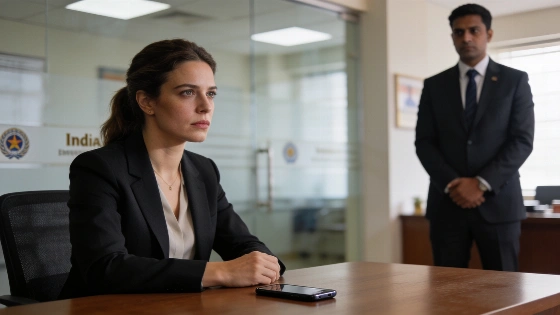
The legal battle over evidence in a high-profile harassment case at the Spanish embassy in New Delhi has intensified, as the police agent accusing her former superior, Emilio de la Calle, of sexual and workplace harassment, refuses to surrender her mobile phone to the court. The National Court judge, Francisco de Jorge, ordered the device to be handed over for forensic analysis of audio recordings that are central to the case. However, the agent’s legal team argues that this demand is both invasive and lacks legal precedent, emphasizing that she is the victim and that the accused did not challenge the authenticity of the recordings during his testimony.
The controversy centers on a series of audio files captured by the agent, identified as Sandra (a pseudonym), during her posting at the embassy between 2024 and 2025. The recordings allegedly document repeated verbal abuse and threats from De la Calle, who has since been suspended. Phrases such as “Me quedan ocho meses para putearte y eso se me da muy bien” and “te dejo como un trozo de carne, te reviento, ten cuidado” are among those cited in the investigation. The judge’s request follows a report from the police’s Forensic Acoustics section, which insists that access to the original device, its cables, and access codes is essential to verify the integrity of the evidence and rule out any manipulation.
The agent’s defense, led by lawyer Juan Antonio Frago, has formally appealed the order, warning that handing over her personal phone would leave her without a device for an indefinite period and expose her private communications, images, and emails. The legal team also points out that the judge’s decision does not reference any similar cases or legal basis for such a measure. They argue that the request is not only disproportionate but could also delay the proceedings, as forensic analysis of the device could take months.
According to the case file, the recordings reveal a sustained pattern of intimidation and threats that led the agent to seek psychological treatment and medical attention in New Delhi. The investigation also includes allegations that De la Calle attempted to pressure the agent into concealing the situation from doctors and threatened her career. Despite the gravity of the accusations, the Ministry of the Interior took nearly two months to suspend De la Calle after the agent reported the abuse to a colleague in the Division of International Cooperation. During this period, both were even sent together on an official trip to Kolkata.
The National Court must now decide whether the agent is obliged to hand over her phone for a full forensic review of the audio evidence or whether her appeal will be upheld, sparing her from this requirement. The case has drawn attention to the balance between the rights of victims and the need for thorough evidence verification in criminal proceedings. In a related context, Spanish police have faced scrutiny over evidence handling in other high-profile cases, such as the recent operation against a major bank robbery gang, as reported in a previous investigation into coordinated criminal activity.
Legal experts note that requests for victims to surrender personal devices are rare in Spanish criminal procedure, especially when the accused has not disputed the authenticity of the evidence. The outcome of this dispute could set a precedent for how digital evidence is managed in future cases involving workplace harassment and abuse of authority. The case also highlights ongoing challenges in protecting victims’ privacy while ensuring the integrity of judicial investigations. As the court deliberates, the decision is expected to influence both legal practice and institutional protocols for handling sensitive evidence in Spain’s diplomatic and law enforcement sectors.