Police have cleared El Guano, Ceuta’s last major migrant camp. More than 500 migrants had remained there, while others hid across the city or waited for a route to mainland Spain.
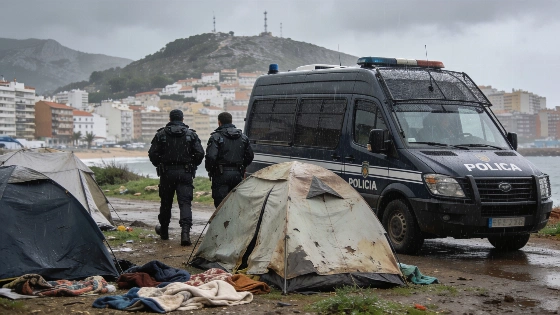
At around 7:30 to 8:00 a.m. on Sunday, more than 20 vans from Spain’s Police Intervention Unit arrived at El Guano in Ceuta. Europa Press and Spain’s National Police reported the operation. Fewer than 1,000 Moroccan migrants had been staying there after earlier actions removed makeshift settlements from Trampolín and Benítez beaches.
The operation did not remove every migrant from Ceuta’s streets.
El Guano had become the main remaining concentration of people who entered the city during the mass arrival of 30 and 31 July. More than 500 migrants remained at the site as cold weather and rain affected Ceuta over the past two weeks. Around 100 were minors who had recently demonstrated at the camp and demanded relocation to reception centres. In the final hours before police arrived, the number at the site had fallen to just over 200.
Ceuta was caring for 2,827 unaccompanied foreign minors as of 8 October, despite an ordinary protection capacity of only 29 places. Local authorities estimated that another 300–400 minors had not yet been identified.
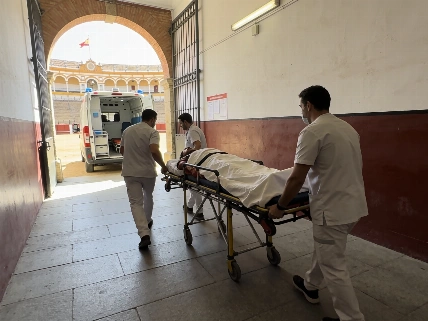
The police action was a relocation operation rather than a complete end to street presence. The camp was dismantled in roughly two hours. Five buses took those removed from El Guano to the CATE, the Temporary Care Centre for Foreigners.
Hundreds of migrants are still moving through districts such as El Príncipe and Los Rosales. Others are hiding in the mountains or living in overcrowded apartments that Spanish authorities are gradually dismantling. Ceuta Actualidad reported that the closure ended the largest visible coastal settlement, but people remained outside the formal reception system.
People taken from the beaches were offered transport towards the Tarajal border for voluntary return to Morocco or to the CATE. There they are registered before being moved to temporary reception facilities while asylum procedures are processed. El Guano followed the same approach used earlier at Benítez and Trampolín.
About 1,700 people were removed from Benítez and Trampolín. Most adults chose to return to their countries, while minors and smaller groups of adults were handled separately. At Trampolín alone, more than 3,500 people were estimated to have spent the night before the operation. Many others scattered across Ceuta to avoid boarding the buses and later moved into the surrounding mountains.
The El Guano clearance took place roughly 48 hours before the planned visit of Spain’s king and queen to Ceuta, where they were due to pay tribute to people who died at sea. One report also referred to at least 80,000 entries during 30–31 July, but that figure may count crossings or attempted entries rather than unique people who remained in the city.
For many Moroccan nationals outside the official process, the calculation is stark. Their asylum applications are considered highly likely to be rejected. Once a final refusal is issued, they face a five-year expulsion order from Spain. Voluntary return preserves the possibility of coming back in the future.
Others refuse both options. They remain concealed in the city without returning to Morocco or registering for asylum. Police sources say some hope to cross irregularly to mainland Spain.
Since early August, the Civil Guard has stopped several attempts to reach the mainland in leisure boats. In some cases, officers arrested people accused of organising the crossings and charging migrants for the journey. In others, the boats had no skipper and had been obtained by the migrants themselves.
An earlier field report examined changing conditions in mountain snow. The Ceuta operation involved a defined site being cleared, but removing tents did not end the movement of people across the city. People shifted towards borders, transport routes, streets and hidden locations.
El Guano was the final large visible settlement. The beaches had been cleared, while buses carried many people away. The remaining population was divided between reception facilities, voluntary return and concealment. Authorities dismantled the camp, but those affected still required a route through registration, reception, return or enforcement.