Spain’s National Police now rely on psychologists to get key details in major cases. Their approach shifts focus from confessions to understanding motives and reconstructing events, changing how serious crimes are investigated.
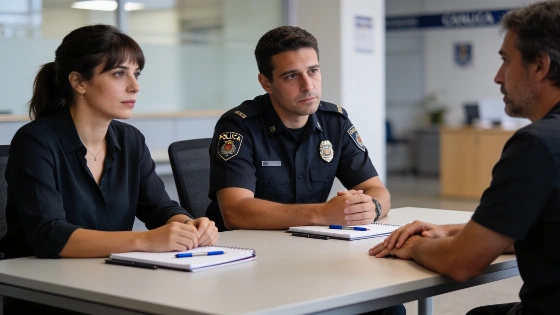
When a suspect sits down with agents at Madrid’s Canillas police complex, the atmosphere is nothing like the old image of a harsh interrogation room. Instead of pressure, the goal is to put people at ease. The National Police’s Sección de Análisis de la Conducta (SAC) has changed how Spain handles its toughest cases, using psychology to draw out information that standard interviews often miss.
Led by inspector jefe David Fernández and subinspectora Belén, these police psychologists step in when regular tactics hit a wall. Their interviews aren’t about forcing confessions. They focus on building trust, setting clear boundaries, and letting suspects, witnesses, or victims talk freely—even if that means some questions go unanswered. This approach often uncovers details that can move stalled investigations forward.
In 2023, the Spanish Ministry of the Interior reported a 30% increase in requests for psychological analysis in criminal investigations compared to the previous year.
Over the past three years, the SAC has worked on 15 to 25 cases each year, but their influence goes back to 2010, with hundreds of cases shaped by their input. Their tools include cognitive interviews, criminal profiling, and psychological autopsies—methods that have helped solve cases like the murder of Denise Pikka Thiem and the Ciudad Lineal child abuse investigation.
In one case, after hours with victims of a sect, survivors said the SAC’s approach helped them make sense of their trauma—something earlier interviews hadn’t managed. In another, a single detail from a rushed interview led to finding a missing person’s body and arresting three suspects. Families often thank the section for treating them with care, not just as case numbers.
The SAC’s work isn’t limited to suspects. They also profile victims and witnesses, including children, to judge the reliability of their statements. When it’s unclear if a death was suicide, accident, or murder, psychological autopsies help reconstruct the person’s life and relationships. In 2012, the death of Mario Miralles in Ontinyent was revealed to be a suicide staged as murder, inspired by the film "La vida de David Gale," after SAC analysts pieced together his psychological profile and the crime scene.
According to a 2022 report by El País, the SAC has contributed expert testimony in over 40 high-profile court cases across Spain, with judges increasingly relying on their psychological assessments to inform verdicts. The unit’s collaboration with regional police forces has also expanded, reflecting a nationwide trend toward integrating behavioral analysis into standard investigative procedures.
All SAC agents are trained psychologists, chosen for their analytical skills, social awareness, and ability to handle uncertainty. New members train for at least two years before working on their own. The section’s methods are based on the Spanish-developed VERA model (Victim, Scene, Reconstruction, Offender), influenced by the FBI’s Behavioral Analysis Unit and European experts like David Canter and Aldert Vrij.
Demand for the SAC’s help is rising. Their agents are called as expert witnesses in court and travel across Spain to support investigations. The work rarely fits a textbook; each case requires flexibility and emotional strength. As Belén points out, the emotional impact can be lasting—sometimes following them home, as when she recognized a child’s clothing from a case in her own son’s wardrobe.
Recent cases, such as the abuse investigation at the Waldorf school in Zaragoza, have shown the SAC’s skill in connecting with victims and getting crucial testimony. Their approach is a clear break from the old image of police interrogations, focusing on respect, patience, and psychological understanding.
The SAC’s methods don’t replace standard police work, but add an important layer of impartial analysis and depth. Their findings can shift investigations, clarify motives, and make sure no detail is missed. This approach is becoming a key part of modern policing in Spain, especially as cases grow more complex and public scrutiny increases. The evolution of Spain’s investigative techniques, seen in the SAC, reflects a wider move toward multidisciplinary strategies in law enforcement—a trend also seen in recent cases like the investigation into border operations in Ceuta.
Spain’s use of psychological analysis in policing marks a clear shift away from old, adversarial tactics. The SAC’s record shows that understanding human behavior is not just theory—it’s a practical tool that gets results, helps families, and strengthens trust in the justice system. As criminal cases become more complicated, the need for this expertise will only grow, making the SAC’s work a vital part of Spanish law enforcement.