Catalan police have released an AI-generated image to identify a woman found dead in the Segre River. The body was discovered near the Instituts bridge in Lleida. Authorities hope the new technology will aid the investigation.
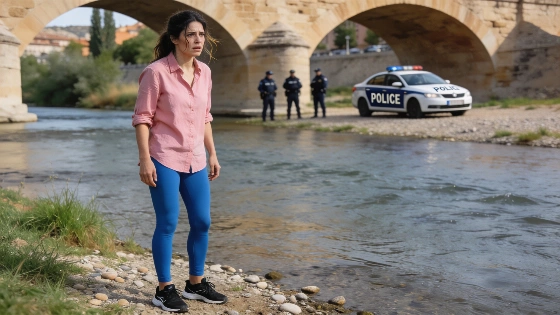
An AI-generated image has been released by the Mossos d'Esquadra in an urgent effort to identify a woman whose body was discovered in the Segre River, near the Instituts bridge in Lleida. The woman, found on July 3, had no identification documents with her, complicating the work of investigators. Police are now turning to advanced technology, hoping that the digital reconstruction of her face will prompt someone to recognize her and come forward with information.
According to the Mossos, the deceased was wearing a pink shirt, blue leggings, and black sports shoes at the time she was found. These clothing details, along with the AI-generated portrait, are central to the identification process. Authorities have set up a dedicated email address and phone line for tips, emphasizing that even small pieces of information could be crucial in resolving the case.
The use of artificial intelligence in this context marks a notable shift in investigative methods for Spanish police. While traditional identification techniques remain essential, digital reconstructions are increasingly being used when conventional avenues are exhausted. This approach reflects a broader trend in law enforcement across Europe, where technology is playing a growing role in solving complex cases.
Unidentified bodies in Spanish rivers are rare but not unprecedented. In recent years, authorities have faced several challenging cases involving missing persons and accidental deaths in waterways. For example, the risks associated with water-based activities were highlighted in another incident, where a tourist lost her life after falling from an inflatable towed by a yacht off Xàbia—a case that drew attention to safety concerns in busy tourist areas, as reported in coverage of the Xàbia yacht accident.
In the Lleida case, the Mossos d'Esquadra are urging anyone who may recognize the woman or recall seeing someone matching her description to contact them. The hope is that the combination of AI technology and public cooperation will lead to a breakthrough. The use of digital facial reconstruction is still relatively new in Spain, but it is gaining traction as a tool for both identification and public appeals. As the investigation continues, the case underscores the evolving intersection of technology and police work in the search for answers in unexplained deaths.
For context, Lleida is a provincial capital in Catalonia, situated along the Segre River, which is known for its strong currents and occasional flooding. The Instituts bridge is a well-known local landmark, and the area is frequented by both residents and visitors. The Mossos d'Esquadra, Catalonia's regional police force, have increasingly adopted new technologies in recent years, reflecting broader changes in Spanish law enforcement. The outcome of this case may influence how similar investigations are handled in the future, especially as AI tools become more accessible and effective.