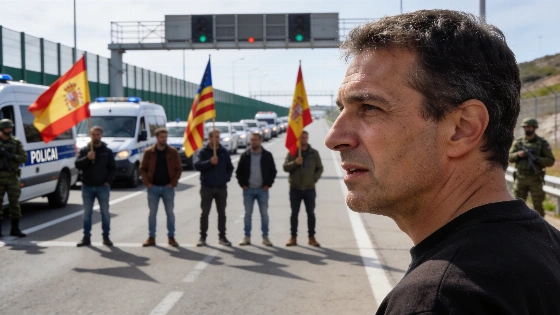
More than 1,000 people marched in Ceuta to defend Spanish sovereignty. More than 200 protesters then blocked the Tarajal crossing for an hour, stopping entry from Morocco.
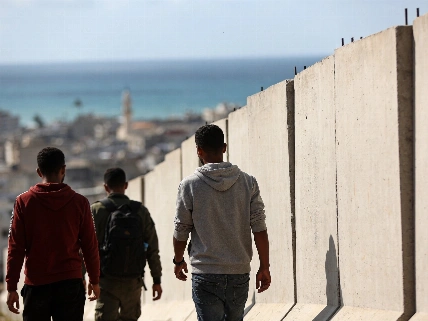
More than 200 protesters occupied the Tarajal border crossing in Ceuta for an hour on Sunday after a march defending the city's Spanish identity. Their action stopped people arriving from Morocco and created a long queue. A civic protest had become a direct interruption at one of the city's main border points.
More than 1,000 Ceuta residents gathered at the Juan Carlos I esplanade, three kilometres from the Moroccan border. They then marched towards Tarajal behind a European flag carried by representatives of the Federación Provincial de Asociaciones de Vecinos (FPAV). The organisation had called the event to demand protection for Ceuta's border. Its manifesto also defended what it described as the city's Spanish character. The mobilisation took place on Sunday, 20 September 2026.
On 17 September 2026, the European Parliament called for stronger protection of the European Union’s external borders in connection with the events around Ceuta.
The decisive moment came when more than 200 participants refused to leave the crossing. People trying to enter Spain from Morocco had to wait while the protest continued. The queue stayed in place for around an hour. The blockade then ended.
The march carried a banner reading S.O.S Ceuta invadida. It also included flags of Ceuta, Spain and Europe. Protesters criticised the Government's representative in the city and called for the delegate's resignation. They used the slogan Triano, canalla, tú no eres caballa. A separate motorcyclists' gathering was scheduled for the same time and was also expected to converge on Tarajal.
The slogans went beyond a call for border protection. Some demonstrators said Spain had to be respected and Ceuta defended. Another message presented the blockade as an answer to what participants called an earlier invasion from Morocco. The crowd also used the phrase Ceuta será la tumba del sanchismo, linking the protest to opposition against Pedro Sánchez's government.
The protest followed a fresh migration crisis around Ceuta. Reuters reported on 18 September that Spanish police had carried out an operation to clear migrants from the city’s beaches and move some of them to temporary accommodation. The same reporting noted that the crisis was helping to amplify the far-right political agenda in the European Union despite a decline in new arrivals.
Police vans and military personnel escorted the march from the esplanade to the crossing. The report gives no indication of arrests or injuries. It does record one clear operational result: entry from Morocco stopped for an hour while the queue grew.
The action followed a period in which migration pressure had become a central issue in Ceuta, as described in an earlier report. That context helps explain why the FPAV chose the border itself rather than a distant civic venue for its main demand. At Tarajal, the dispute over Spanish sovereignty became visible through a physical interruption of crossing traffic. On 17 September, the European Parliament also condemned the mass migrant crossing into Ceuta at the end of July and called for a full independent investigation.
The protest brought together a residents' march and a demand for stronger protection of Ceuta's territory. It also temporarily blocked people trying to enter Spain. The organisers' political language sharpened the message. Occupying the crossing gave the action an immediate practical effect. Available reporting does not confirm any new formal Spanish-Moroccan agreement specifically concerning Tarajal. The border's operating arrangements remain linked to existing agreements and operational decisions.
Ceuta's demonstration was more than a symbolic march because it briefly controlled access at the Tarajal crossing. Residents used a border point to press their territorial and political demands in public view. The hour-long interruption put people trying to cross at the centre of the protest's impact. Based on the facts reported here, the clearest consequence was not a new policy. It was a direct challenge to the normal operation of the frontier. The event was a forceful protest with a tangible local cost.