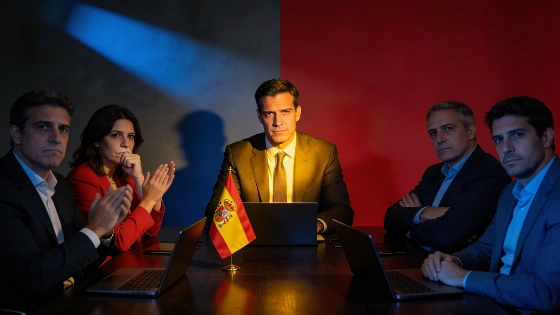
At a critical moment for Pedro Sánchez, the PSOE federal committee avoided open dissent. Only García-Page and Palencia's mayor broke ranks, as most leaders backed the party line amid mounting judicial and political pressure.
Internal divisions within the PSOE surfaced but did not erupt during the latest federal committee meeting, as party leaders largely refrained from public criticism of Pedro Sánchez. With the party facing a series of electoral defeats and a growing judicial crisis, the leadership focused on projecting unity. Only Emiliano García-Page, president of Castilla-La Mancha, and the mayor of Palencia openly distanced themselves from the prevailing stance, while the rest of the committee avoided any move that could be interpreted as aligning with opposition calls for elections or a government confidence vote.
The atmosphere was shaped by ongoing judicial investigations and intense media scrutiny surrounding Sánchez and the party headquarters. This climate has reinforced a sense of siege among PSOE members, discouraging dissent and consolidating support for the current leadership. Behind closed doors, most interventions from regional leaders were aimed at reaffirming loyalty to Sánchez, with pointed criticism directed at García-Page for his dissent. The message was clear: any deviation from the official line could be seen as aiding those seeking to unseat the government.
Notably, figures such as Adrián Barbón, president of Asturias, and Adriana Lastra, former deputy secretary general, avoided taking independent positions. Lastra, who previously challenged the party's handling of harassment allegations, publicly defended the current organizational leadership and described Sánchez as being in “good shape.” This marks a shift from her stance a year ago, when she questioned the inclusion of Francisco Salazar in the party’s leadership following harassment accusations.
Despite the party’s deteriorating electoral position and the complexity of the judicial landscape, the PSOE headquarters has worked to instill a narrative of persecution among its base. Recent events, including a lengthy police search at party headquarters and controversial judicial decisions, have been used to rally members and suppress potential unrest among local leaders. The suggestion that general elections might precede municipal and regional contests has also helped contain internal anxiety, as some party officials believe this sequence could benefit local candidates if national negotiations between PP and Vox become a focal point.
While concern is widespread within the PSOE, it has not translated into open confrontation at the federal committee. The lack of a forum for frank discussion of the party’s challenges remains notable. Sensitive issues, such as disappointment over José Luis Rodríguez Zapatero’s activities or unanswered questions about valuables found in his office, were not addressed publicly. The leadership’s strategy has been to maintain discipline and avoid any appearance of internal crisis, even as many privately express frustration.
This pattern of internal management echoes broader trends in Spanish politics, where party unity is often prioritized over open debate. For context, recent public controversies—such as the disruption of a minute of silence for Venezuela’s earthquake victims at a major football match—have also highlighted the challenges of maintaining cohesion in the face of external pressures. Coverage of that incident can be found in this report: public reaction to the disrupted tribute at the Spain-Uruguay match.
In summary, the PSOE’s current approach is to close ranks and minimize visible dissent, even as electoral setbacks and judicial scrutiny continue to test the party’s resilience. The coming months will be critical as the leadership seeks to navigate these challenges and prepare for the next electoral cycle. The situation underscores the delicate balance between party discipline and the need for internal renewal in Spain’s political landscape.