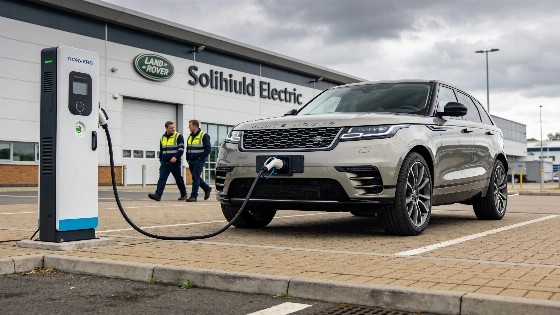
Range Rover has launched its first fully electric SUV, offering up to 600 km of range and a 22-minute charge from 10% to 80%. Orders are open in the UK, but pricing and arrival details for Spain are still unknown.
Range Rover’s first electric SUV arrives a year later than planned, promising up to 600 kilometers of WLTP-certified range and fast charging that could challenge its competitors. Orders are now open in the UK, where the starting price is £154,070. Buyers in Spain will have to wait for local pricing and delivery information.
This launch is more than just a new model for Range Rover. It’s a test of how well the brand can adapt as European carmakers move toward electrification. The Range Rover Electric is built in Solihull on the same line as combustion, mild hybrid, and plug-in hybrid models. This setup lets the company adjust production as regulations and customer demand shift. BBC and Forbes report that this flexible approach is a direct response to the uncertain pace of EV adoption and changing rules.
In South Korea, orders for the Range Rover Electric will only begin in September 2026, with the official launch scheduled for mid-2027, highlighting the model's phased global rollout.
The technical specs point to a focus on both luxury and performance. Two 260 kW electric motors—one for each axle—combine for 550 horsepower and 850 Nm of torque. The 118.5 kWh battery, running at 800 volts, lets the SUV accelerate from 0 to 60 mph in 4.3 seconds and tow up to 2,500 kilograms. Range Rover says the battery can charge from 10% to 80% in 22 minutes at a 350 kW public charger, or recover 220 kilometers of range in ten minutes. Charging at home is slower: seven hours with a 22 kW AC supply, or up to 19 hours on a standard 7 kW setup. These numbers come from official JLR statements and industry reviews.
The 600 km range headline comes with a footnote. Range Rover estimates that real-world driving will likely get closer to 535 kilometers, and factors like temperature, driving style, and off-road use can lower that further. The SUV keeps its off-road features, including a wading depth of 900 millimeters and the ability to handle rough terrain—key parts of the brand’s identity as it moves to electric power. WhichEV notes that the official WLTP range is about 372 miles, but actual results will vary.
Preparing for this shift has meant retraining staff and updating factories. The company says 9,000 workers in Solihull and another 1,500 in the West Midlands have been retrained for electric vehicle production. Battery packs and drive units are assembled in Wolverhampton. The vehicle has gone through over 1.5 million kilometers of physical testing and 250,000 hours of combined virtual and real-world trials.
JLR highlights that the Range Rover Electric is available in both short and long wheelbase versions, with trim levels including SE, HSE, Autobiography, SV, SV Ultra, SV Black, and a special First Edition. This broad lineup is intended to appeal to a wide range of luxury SUV buyers as the brand transitions to electrification.
JLR Media
For now, the £154,070 price applies only to the UK and certain trims. Buyers can choose between short and long wheelbase models, with options like Autobiography, SV, and a limited First Edition. The battery comes with an eight-year or 160,000-kilometer warranty, whichever comes first, according to manufacturer terms.
This electric Range Rover arrives as European regulators relax some emissions rules, giving brands like JLR room to keep multiple powertrain options. Talent24h notes that this flexibility is a response to regulatory uncertainty and slow EV adoption. The real question is whether Range Rover’s customers are ready for a battery-powered model, and if the brand’s mix of luxury and capability will carry over to electric. For now, Range Rover has delivered a technical showcase. Whether it becomes a milestone or just another expensive experiment will depend on the market.