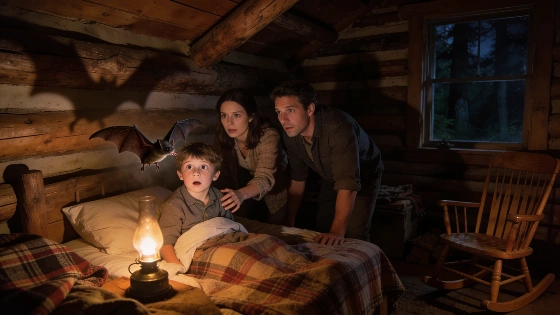
An 11-year-old boy in Ontario died from rabies after unknowingly being bitten by a bat. The case, detailed in a medical journal, underscores the dangers of unnoticed animal contact and the importance of rapid medical response.
An 11-year-old boy from Ontario, Canada, died from rabies in the summer of 2024 after an unnoticed bat bite, according to a report published by the Canadian Medical Association Journal. The incident occurred in a cabin, where the child awoke at night to find a bat resting on his face. He managed to remove the animal, and his father later captured and released it. Neither the boy nor his parents realized a bite had occurred, so no medical attention was sought until symptoms appeared nearly three weeks later.
Nineteen days after the encounter, the boy began experiencing tingling and numbness on the right side of his face, along with facial swelling and loss of appetite. His condition quickly worsened, with vomiting and pain while swallowing prompting a visit to the emergency room. Initial assessments pointed to a herpes infection and Bell’s palsy. However, within a day, his health deteriorated further, with speech difficulties, fever, confusion, and visual hallucinations. Only then did doctors connect his symptoms to the earlier bat contact and suspect rabies, which was soon confirmed by laboratory tests.
Despite intensive treatment, the child’s neurological state declined rapidly and irreversibly, leading to his death. The case is notable as rabies is extremely rare in Canada, with only 24 cases reported since 1924 and none in Ontario since 1967. The report emphasizes that bats are the main source of rabies in North America, and their bites or scratches can go completely unnoticed due to their small size. Medical experts recommend seeking immediate healthcare after any direct contact with a bat, even if no visible injuries are present.
Rabies remains almost universally fatal once symptoms develop, but post-exposure prophylaxis—combining rabies vaccine and immunoglobulin—can prevent the disease if administered promptly. The Canadian Medical Association Journal highlights the importance of rapid intervention, as delays can be deadly. This case echoes broader concerns about the risks of overlooked animal encounters, especially during summer months when wildlife contact increases. Similar health emergencies, such as the recent heatwave in Spain that resulted in over a hundred deaths, have also drawn attention to the need for public awareness and timely medical action. For more on how extreme events can impact health outcomes, see this report on the deadly heatwave in Spain.
Rabies is caused by a virus that attacks the nervous system and is almost always fatal once clinical symptoms appear. In most developed countries, human cases are rare due to widespread vaccination of pets and wildlife control, but sporadic incidents still occur, often linked to bats. The World Health Organization estimates that tens of thousands of people die from rabies each year worldwide, mostly in regions where dog vaccination is less common. In Spain, rabies is considered eradicated in domestic animals, but authorities continue to monitor for imported cases and recommend caution after any animal bite abroad. The Ontario case serves as a reminder that even in countries with low incidence, vigilance and prompt medical care remain essential after any suspicious animal contact.