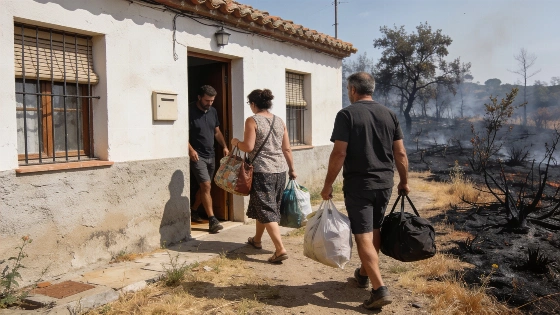
Authorities in Segovia have allowed nearly 180 evacuated residents to return home. The wildfire risk has been downgraded and the SG-722 road is open again. Emergency measures are being lifted after days of disruption.
Nearly 180 residents from Los Ángeles de San Rafael and Vegas de Matute are returning to their homes after Segovia’s wildfire situation improved significantly. The Junta de Castilla y León has lifted evacuation orders and reopened the SG-722 road, which had been closed due to the fire that broke out over the weekend in Navas de San Antonio. The fire’s Potential Severity Index (IGR) has now been reduced to level 1, reflecting a lower threat to the area.
The decision to allow residents back was made by the Centro de Coordinación Operativa Integrado (CECOPI) on Tuesday morning, following two nights where evacuees were housed in sports facilities in El Espinar and the La Panera civic center in Villacastín. The move comes after the confinement of Valdeprados was lifted late Monday, as fire crews managed to stabilize the perimeter and keep the flames under control overnight.
Authorities credit the progress to improved weather conditions and the intensive work of both ground and aerial firefighting teams. By Monday afternoon, officials confirmed that the fire’s perimeter had not expanded and that there were no active flames in the affected area. The reopening of the SG-722 restores a key local route, easing movement for residents and emergency services alike.
Raquel Alonso, the Junta’s territorial delegate, highlighted the effectiveness of the overnight operations, noting that the fire in Navas de San Antonio remains contained and without visible flames. She also announced that logistical support is underway to ensure all displaced residents can return safely. Alonso expressed gratitude for the coordinated efforts of local administrations, volunteers, and firefighters who supported the community throughout the crisis.
Ignacio Quintanilla, head of the regional Environment Service, stated that surveillance and perimeter consolidation will continue throughout the day, as favorable weather conditions persist. The focus now shifts to monitoring the area to prevent any resurgence of the fire.
This latest development follows a series of emergency measures in the region, including mass evacuations and road closures, as detailed in recent reports on the wildfire response in Segovia and Castellón. The rapid response and coordination between agencies have been crucial in minimizing damage and ensuring public safety.
Wildfires are a recurring challenge in Spain, particularly during periods of high temperatures and dry conditions. The country has invested heavily in early warning systems, aerial firefighting resources, and community preparedness programs. In recent years, authorities have emphasized the importance of rapid evacuation protocols and inter-agency cooperation to reduce risks to both people and property. The events in Segovia underscore the ongoing need for vigilance and robust emergency planning in rural and forested regions.