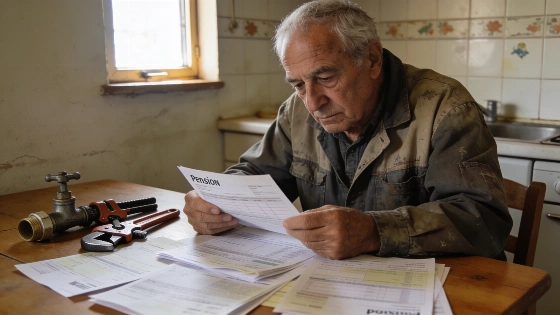
David, a 75-year-old retired plumber, receives just €500 a month after more than five decades as a self-employed worker. His story highlights the financial risks many autónomos face in Spain, where long careers do not always translate into comfortable retirements.
At 75, David still keeps a hand in the plumbing business he started at 24. Despite more than half a century of self-employment, his monthly pension is just €500—a figure he says would be impossible to live on without the savings and investments he and his wife made during their working years.
David's case, shared on the program La Linterna on COPE, puts a spotlight on a harsh reality for many of Spain's autónomos: years of hard work do not always add up to a secure retirement. While his wife receives a pension of around €1,000, their combined income of €1,500 a month only covers their needs thanks to careful financial planning. "If we hadn't invested, it wouldn't be enough," David admitted, though he did not specify the nature of their investments.
Long Careers, Modest Pensions
David's experience underlines a key issue in Spain's pension system. The amount a retiree receives is not determined solely by years worked, but by the bases on which they contributed to Social Security. Many self-employed workers, seeking to minimize monthly payments, contribute at the lowest possible base—often resulting in much smaller pensions than those in the general regime.
Official data from June 2026 shows the average retirement pension for autónomos stands at €1,060.60 per month, while those in the general regime receive €1,732.20—a gap of nearly 39%. David's €500 pension is less than half the average for self-employed retirees, reflecting how contribution choices made over a lifetime can have lasting consequences.
Still Working After Retirement
Despite reaching retirement age, David continues to work, a path open to some pensioners under Spain's "active retirement" rules. These allow certain retirees to combine part of their pension with ongoing professional activity, provided they meet specific requirements set by Social Security. In some cases, limited self-employment is permitted if annual earnings do not exceed the minimum wage. However, the details of David's arrangement were not disclosed, making it unclear which rules apply in his case.
Planning Is Essential
David's story is a cautionary tale for Spain's growing population of self-employed workers. Without strategic financial planning and higher contributions, even a lifetime of work may not guarantee a comfortable old age. The Social Security system offers a simulator for workers to estimate their future pensions and see how early or late retirement could affect their benefits.
As Spain debates the future of its pension system, cases like David's highlight the importance of understanding how contribution bases, investment decisions, and legal frameworks shape the reality of retirement. For many autónomos, the challenge is not just working hard, but working smart—making choices today that will secure tomorrow.