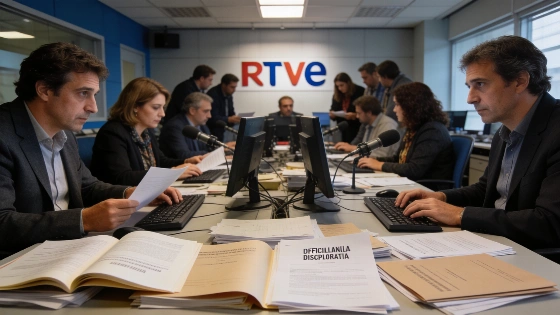
RTVE has confirmed disciplinary proceedings against several RNE staff after formal complaints of workplace harassment and internal misconduct. The broadcaster insists on legal compliance and protection for those involved, amid growing public attention.
RTVE has publicly addressed the recent controversy surrounding disciplinary proceedings initiated against several professionals at RNE. The broadcaster clarified that these actions stem from two separate lines of investigation: allegations of workplace harassment and reported internal irregularities. Both cases, according to RTVE, are being handled in strict accordance with legal obligations and established procedures.
The first investigation involves two formal complaints of workplace harassment filed by RNE employees. An external technical report validated the seriousness of the allegations, obliging the Human Resources department to open disciplinary files. RTVE emphasized that, although the Commission for Psychological Harassment at Work—composed of union representatives—did not reach a majority to issue a specific resolution, this lack of consensus does not invalidate the ongoing process. Human Resources retains full authority to continue the proceedings as required by law.
In parallel, two current members of the RNE News Council have reported alleged irregularities and malpractice within the council itself. These concerns were formally submitted to the General Secretariat, which has since forwarded the matter to the Internal Audit and Compliance Directorate for official investigation. RTVE stressed that these disciplinary actions are not directed at the News Council as an institution, but rather focus on individual conduct. The broadcaster reiterated that membership in a representative body does not grant immunity from scrutiny or complaints related to harassment or regulatory breaches.
RTVE also underlined that the opening of a disciplinary file is not a sanction and does not imply any presumption of guilt. Instead, it is a procedural step that allows those involved to present evidence, make statements, and defend themselves with full legal guarantees. The corporation expressed concern over the public dissemination of the case, particularly the publication of complainants' names, warning that such exposure could discourage future victims from coming forward due to fear of public vulnerability.
Responding to an urgent meeting request from the News Councils, RTVE's management reaffirmed its commitment to dialogue, but insisted that the protection of complainants and respect for legal procedures remain non-negotiable. The broadcaster called for all parties to prioritize the safeguarding of those who have reported misconduct and to uphold the integrity of the investigative process.
RTVE has proposed an institutional approach to restore workplace harmony, emphasizing that any resolution must be grounded in respect for labor rights. The corporation advocates for constructive dialogue that acknowledges the motivations of complainants—whose reports were not deemed false or unfounded by the external review—and for the immediate restoration of fundamental workplace norms. RTVE also urged all three of its news councils to remain focused on their foundational purpose.
This situation echoes broader challenges faced by Spanish public institutions in managing internal disputes and safeguarding employee welfare. For example, a recent case involving the Guardia Civil director, as reported in coverage of government responses to internal investigations, highlights the complexities of balancing transparency, legal obligations, and the protection of those involved. Such cases underscore the ongoing need for clear procedures and robust protections within Spain's public sector.
In Spain, workplace harassment and internal misconduct are subject to strict legal frameworks, with public entities required to act promptly on credible complaints. The handling of such cases often draws significant public and media attention, especially when they involve high-profile organizations like RTVE. The corporation's insistence on legal compliance and its call for responsible reporting reflect a broader effort to maintain trust and accountability in the public sector. As the investigations at RNE continue, the outcome may set important precedents for how similar cases are managed in the future.