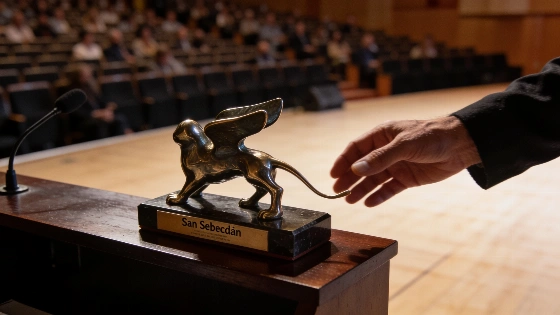
San Sebastián opens its 74th festival with 263 films from 47 countries. José Luis Rebordinos is leaving after fifteen years, while Werner Herzog will receive the first Donostia Award.
José Luis Rebordinos is opening his final edition as director of the San Sebastián International Film Festival. He has held the post for fifteen years. The 74th Zinemaldia begins with 263 films from 47 countries, and the red carpet is ready at the Kursaal. Werner Herzog will receive the festival's first Donostia Award.
The Official Selection includes 17 feature films competing for the main prizes, including the Golden Shell. Trade coverage describes the titles as world premieres outside their countries of production. Three are Spanish. Organisers are also introducing a best soundtrack award for the first time.
The 74th San Sebastián Film Festival runs from 18 to 26 September 2026, according to the festival’s official website.
Almost all screenings have sold out.
This gives the edition a clear institutional weight. San Sebastián is closing the fifteen-year cycle led by Rebordinos, who took charge in 2011. In an interview with RTVE, he described it as a normal edition, although small tributes are planned around his departure and the emotion they may bring.
Rebordinos measures those fifteen years through the festival's growing reach in the film industry. He says the event already had major cinematographic prestige when he arrived, but very little industry presence. The number of accredited industry professionals has since risen from just over 600 to more than 2,400, according to his own assessment. That figure is his estimate, not an independently audited statistic.
The festival has already announced that the closing film will be Le Faux Soir by Belgian director Michaël R. Roskam. Naomi Watts is also due to receive a Donostia Award at a special screening on 19 September, giving the 2026 edition two separately announced recipients of the honour.
He also points to a fuller calendar. The aim was to take the festival beyond its nine official days and make it a year-round institution. The festival's official materials and international industry coverage present that expanded professional role as one of the main changes of the Rebordinos era.
His personal account is tied to names and missed chances. Rebordinos recalls Glenn Close as the first Donostia Award recipient of his tenure. He also mentions Monica Bellucci, Sigourney Weaver, Javier Bardem and Ricardo Darín, whom he describes as a friend. Julianne Moore and Clint Eastwood are the two absences he regrets most.
His most controversial decisions are part of that record. Rebordinos says he is proud that the festival defended the presumption of innocence when it invited Johnny Depp amid allegations of mistreatment involving his former wife. He also cites the defence of freedom of expression through the screening of the film about Josu Ternera. The festival's condemnation of the genocide in Gaza, he says, was a basic human-rights issue. EFE reported that the opening also included explicit statements in support of artistic freedom and dissident cinema.
Actresses Mariona Terés and Fariba Seikhan will present the opening ceremony. It will be broadcast live on La 2 and RTVE Play. Herzog's latest film, Bucking fastard, will be shown during the evening, with Orlando Bloom also in San Sebastián as its male lead. Festival coverage and EFE have confirmed Herzog's Donostia Award.
Radiotelevisión Española is an official sponsor and will cover more than the ceremony. TVE and RNE programmes and news spaces will broadcast from the RTVE tent. RTVE Play is also launching the channel 'RTVESANSEBASTIANFES' for festival information.
The handover is more than a ceremonial farewell. Rebordinos leaves behind a festival with a larger industry presence, a year-round ambition and strong audience demand. The 74th edition is also a test of the legacy he has described. San Sebastián is starting its next chapter from a stronger institutional position than the one he found in 2011.