Pedro Sánchez addresses Congress after over 80,000 migrants entered Ceuta. A police report implicates Moroccan agents. Public protests and calls for resignations intensify the political crisis.
Pedro Sánchez is under intense scrutiny as he appears before Congress to explain his government's handling of the mass arrival of more than 80,000 migrants in Ceuta at the end of July. The Prime Minister faces criticism not only for the response itself, but also in light of a police report that points to Moroccan agents' involvement in the border breach.
Protests have erupted in support of Ceuta, quickly turning into rallies against the government. Opposition parties and local groups are demanding accountability, with some calling for Sánchez to step down. Many in Ceuta say the government acted too slowly and failed to provide enough support, leaving thousands of new arrivals scattered across the city and putting pressure on local services. Residents report growing anxiety as the situation drags on.
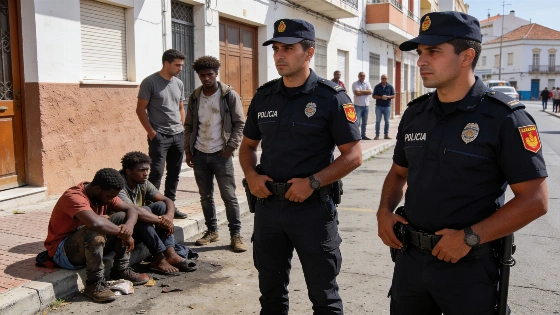
According to recent reports, around 5,000 migrants, including approximately 1,200 minors, are still present in Ceuta, even after the main wave was returned to Morocco following July 30–31.
On July 30 and 31, tens of thousands crossed from Morocco, many swimming into Spanish territory. Local authorities were overwhelmed, and Ceuta was left facing a humanitarian and logistical crisis. The police report claims Moroccan agents helped facilitate the mass entry, a detail that has fueled public anger and complicated relations with Morocco.
Calls for political responsibility have come from across the spectrum. The Partido Popular (PP) demanded Sánchez appear in Congress, and the Prime Minister himself requested the session, underlining the seriousness of the crisis. The debate has exposed deep divisions, with the PSOE and PP trading blame over the response and the motives behind the protests. As reported earlier, the PSOE has accused the PP of using the unrest for political advantage, further polarizing the situation.
The government says it is working to restore order and support Ceuta, but the city remains tense. Thousands of migrants are still in the city, and local officials warn that the situation cannot continue without immediate help from Madrid. The police report has only increased scrutiny of both the Spanish and Moroccan governments, raising questions about border security and cooperation between the two countries.
Estimates of the July influx vary widely, with some sources citing over 70,000 crossings and others mentioning more than 80,000, highlighting significant discrepancies between official and local counts. The Spanish Ministry of the Interior has denied that any police report formally blames Moroccan state structures, stating that internal communications do not establish government involvement.
The crisis has exposed weaknesses in Spain's border management and the fragile relationship with Morocco. The slow response and ongoing political disputes have eroded public trust, leaving Ceuta's residents to deal with the consequences. Without clear action and communication from Madrid, the situation risks becoming a lasting source of tension in Spanish politics.