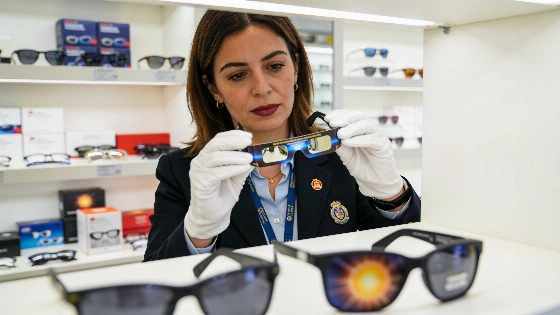
Spanish authorities have banned six brands of solar eclipse glasses after safety checks revealed a risk of eye injury. The recall affects products sold in Madrid, Galicia, Castilla y León, La Rioja and Aragón.
Spanish consumer protection authorities have ordered the immediate withdrawal of six models of solar eclipse glasses after detecting manufacturing flaws that could lead to serious eye injuries. The affected products, sold under the brands Lionstar, ECP Eye Care Proffesional, Pelispan, Homanaje, Orro and Opticalia, were identified during inspections in Madrid, Castilla y León, Galicia, La Rioja and Aragón, according to FACUA-Consumidores en Acción.
Investigators found that all six models shared a critical defect: the filter used in the glasses was excessively dark, falling below the minimum required level of light transmission. This flaw means users see only total darkness when wearing the glasses, making it impossible to locate the solar disc during an eclipse. As a result, many people instinctively move the glasses aside or remove them briefly to find the sun, exposing their eyes directly to harmful solar radiation. This momentary lapse in protection can cause chemical or thermal damage to the foveal cells of the retina, leading to potentially irreversible vision problems.
The Ministry of Social Rights, Consumer Affairs and Agenda 2030 has included these models—specifically Lionstar (LSP1), Homanaje (QW-50Z1), Orro (O37-R), and the full ranges from ECP Eye Care Proffesional, Pelispan and Opticalia—in its national alert network for dangerous non-food products. The order not only bans further sales but also requires the immobilization of all units already distributed in the market.
FACUA warns that similar irregularities could be present in other eclipse glasses currently being sold or given away, especially as demand rises ahead of astronomical events. The organization urges consumers to check that any solar viewing glasses meet European safety standards and to avoid using products without clear certification. The risk is not limited to the recalled brands, as substandard filters can appear in a wide range of products, particularly those distributed for free or sold online without proper oversight.
Spain has seen heightened concern over eclipse safety in recent years, with authorities emphasizing the dangers of removing protective eyewear even for a moment. As highlighted in a recent analysis of eclipse safety protocols, strict rules for eclipse viewing have been implemented across the country to prevent lasting eye damage. The latest recall underscores the importance of using only certified glasses and following official guidance during solar events.
Solar eclipses attract widespread public interest in Spain, with schools, science centers and local authorities often organizing viewing events. However, the surge in demand for eclipse glasses has led to a proliferation of uncertified products, increasing the risk for unsuspecting users. According to European regulations, safe eclipse glasses must block out harmful ultraviolet, visible and infrared radiation, allowing only a tiny fraction of light to pass through. Consumers are advised to purchase glasses from reputable sources and to verify that products carry the CE mark and comply with EN ISO 12312-2 standards. The recall serves as a reminder that improper eyewear can cause permanent vision loss, and that even a brief exposure to direct sunlight during an eclipse can have serious consequences.