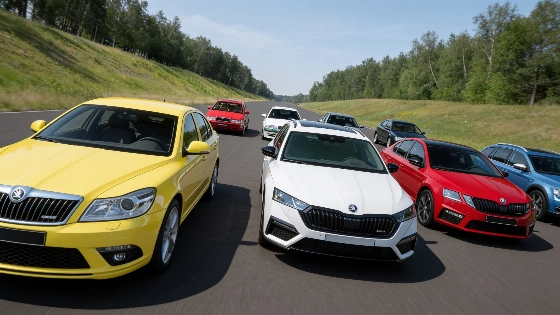
Nearly 8 million Skoda Octavias have been built since 1996. The model’s steady rise from modest beginnings to a European bestseller shows what really drives Skoda’s success.
When Skoda Octavia passed 7.9 million units produced, it wasn’t just another sales figure. It showed what European families actually look for in a car: practicality, reliability, and value, not status symbols.
Skoda’s path to this point was far from simple. The Octavia name first appeared in 1959 on a compact two-door sedan built in Mladá Boleslav. That early Octavia, the eighth postwar model, brought technical touches like a torsion bar stabilizer and asymmetric headlights—signs of Skoda’s ambitions even under Eastern Bloc limits. Production ended in 1964, and the Octavia name disappeared for almost thirty years.
The first modern Skoda Octavia rolled off the Mladá Boleslav production line on September 3, 1996, marking the true beginning of the current model's legacy.
The real shift came in the early 1990s, when Skoda joined the Volkswagen Group. This move, similar to what’s happening with other European brands in recent restructuring, gave Skoda access to German engineering and investment. The Octavia’s return wasn’t about nostalgia. It was a calculated decision: a new platform, a Belgian designer (Dirk van Braeckel), and a production jump from 90,000 to 350,000 cars per year. The result was a mid-size sedan with a huge 528-liter boot—hardly glamorous, but exactly what families and businesses needed.
By 1996, the Octavia was back as a five-door liftback. The idea was clear: maximize space, keep costs low, and use proven Volkswagen technology. The Combi estate followed in 1998, and the first Octavia RS performance model arrived in 2000. The first generation sold 1.44 million units, with some versions staying in production until 2010, even after the second generation launched.
Skoda stuck with what worked. The second-generation Octavia, launched in 2004, offered a bigger boot, added the DSG dual-clutch gearbox, and reached 2.6 million units by 2013. The third generation, from 2012 to 2020, brought lighter bodies, more efficient TSI and TDI engines, and driver assistance systems usually found in more expensive cars. The GreenLine version aimed at buyers who wanted better fuel economy, with aerodynamic tweaks and energy recovery features.
According to official Skoda statements, the Octavia remains the brand's top-selling model and is currently produced at three locations: Mladá Boleslav and Kvasiny in the Czech Republic, as well as Kostanay in Kazakhstan. This production geography has been confirmed by multiple industry sources and reflects the model's ongoing global relevance.
The current Octavia generation arrived in 2019, adding more connectivity, up to ten airbags, and systems that monitor driver alertness. The 2024 update improved its digital features and safety tech, keeping it competitive in a segment where rivals often focus on style over substance.
The Octavia stands out not for radical innovation, but for sticking to the basics. While other brands have chased trends or faded away—see the fate of Seat as reported earlier—Skoda has built its reputation on consistency. The Octavia’s steady popularity with both private buyers and fleet operators across Europe comes from this approach.
Three decades after its relaunch, the Skoda Octavia is still going strong. Its story matches Skoda’s own rise: from a regional company with roots in a bicycle workshop to a key brand in the Volkswagen Group. The Octavia’s success isn’t about nostalgia or clever marketing. It’s about delivering what drivers actually use, year after year. In a car market full of constant change, the Octavia proves that getting the basics right still matters.