Spain’s recent solar eclipse triggered a sharp fall in solar power, altered traffic patterns and caused a spike in online searches for eye pain. The event’s impact was felt nationwide, from electricity grids to emergency rooms.
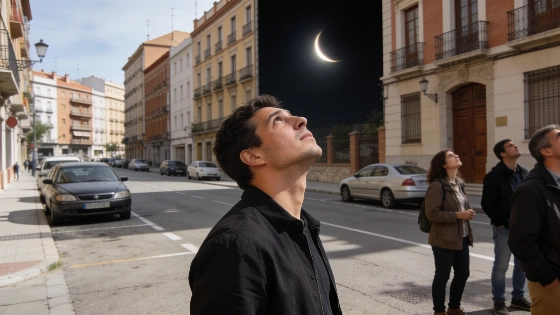
The solar eclipse that swept across Spain this week left a measurable mark on daily life, with effects ranging from a sudden drop in solar energy production to a surge in online searches for eye discomfort. As the sky darkened, the country’s solar power output plummeted far earlier than usual, nearly reaching zero before 20:30. On a typical day, solar generation at that hour would still contribute around 5,000 MW. The eclipse effectively brought an early sunset, forcing energy operators to adjust their forecasts and manage the grid in real time.
Electricity demand also shifted noticeably. Until 19:30, consumption followed the expected pattern for a weekday, but as the eclipse began, demand dropped sharply. This reflected millions of people pausing work, reducing travel, and turning away from screens to watch the rare event. The change was anticipated by Red Eléctrica, which had already planned for the altered energy needs during the phenomenon.
Temperature readings from 19 official AEMET stations showed that in about half of them, especially those located in the central path of the eclipse, there was a more pronounced cooling compared to the same time the previous day. However, in cities like Gijón and Oviedo, thick low clouds blocked the sun, muting the temperature effect. In the United States, similar eclipses have caused drops of 2 to 5 degrees, but the Spanish event was shorter and occurred later in the day.
Traffic patterns also shifted. Data from Mapbox revealed a spike in car movements before the eclipse, followed by a lull as vehicles stopped and people watched the sky. Traffic only returned to normal levels around 3 a.m. the next day. Internet usage in Spain dipped significantly during the eclipse window, with online activity dropping well below the global average as people left their devices to witness the spectacle.
Interest in the eclipse was reflected in digital behavior. Wikipedia visits to the event’s page began rising a year ago, surged in the days leading up to the eclipse, and peaked at nearly 70,000 on the day itself. Google searches focused on where and how to view the eclipse, with “eclipse glasses” overtaking even “eclipse Spain” as the most common query, driven by safety concerns and the withdrawal of some glasses from the market. After the event, searches for “eye pain” quadrupled, and the trend continued into the following morning. Ophthalmology emergency rooms also reported an uptick in visits, though most cases were not serious and actual retinal damage from solar exposure often appears days later and does not cause immediate pain.
Safety concerns around eclipse viewing were widely discussed in the days before the event. As highlighted in guidance on safe eclipse viewing in Spain, experts warned that removing protective glasses even briefly could result in lasting eye injury, a message that likely contributed to the spike in related online searches and emergency consultations.
Spain’s experience with the eclipse underscores how a rare astronomical event can ripple through energy systems, public behavior, and even healthcare. Solar eclipses have historically provided valuable data for scientists and grid operators, revealing vulnerabilities and prompting improvements in forecasting and infrastructure. The event also highlighted the importance of public information campaigns on eye safety, as well as the need for reliable protective equipment. While the next total solar eclipse visible in Spain is not expected for several years, the lessons from this week’s event will likely shape preparations for future occurrences.