Spain has extended document checks for travelers from Italy after Rome prolonged its own controls. The measure affects ports and airports, with a focus on non-EU citizens. The decision follows ongoing security concerns linked to migration flows.
Spain has announced an extension of border checks for passengers arriving from Italy, mirroring a decision by the Government of Giorgia Meloni to maintain its own controls on travelers from Spain. The move, confirmed on Monday, means that document inspections at Spanish ports and airports will continue for at least two more weeks, primarily targeting non-EU citizens. The Spanish Interior Ministry stated that this is a direct response to Italy’s decision to prolong its temporary controls, which were initially introduced on August 1 following a surge of migrants entering Ceuta at the end of July.
Italy’s exceptional measure, originally set to expire on August 31, was extended after the Italian Committee for Immigration and Border Security concluded that the conditions which led to the reinstatement of checks remain unchanged. Italian Interior Minister Matteo Piantedosi had previously warned that the security situation in Ceuta was still unstable, and that a final decision on the controls would be made as the deadline approached. On Monday, Rome officially notified EU authorities of its intention to keep the controls in place.
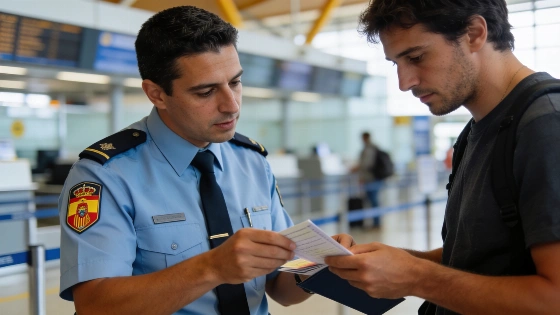
Spain’s reciprocal action ensures that travelers from Italy will continue to face document checks upon arrival. According to the Spanish Interior Ministry, the measure is particularly relevant for non-EU nationals, though all passengers may be subject to inspection. The Spanish government emphasized that the controls are being maintained as long as Italy continues to apply similar measures to Spanish arrivals. The Ministry also confirmed that Piantedosi communicated the decision directly to his Spanish counterpart, Fernando Grande-Marlaska, during what was described as a constructive phone call.
Italian authorities have justified the ongoing controls by citing security concerns, specifically the possibility that individuals linked to terrorist organizations could be among the migrants who recently arrived in Spain. However, no concrete evidence has been presented to support this claim. Italy also acknowledged the steps Spain has taken to address the situation and expressed hope for a return to normal conditions in the region.
In a radio interview with Cadena SER, Spanish Prime Minister Pedro Sánchez criticized the Italian government’s stance, calling the situation “absurd” and arguing that Italy lacks a valid justification. Sánchez pointed out that the Schengen rules are applied differently due to Ceuta and Melilla’s status outside the Schengen Area, and that migrants who entered Ceuta in late July have not reached mainland Spain.
Since the introduction of these controls, Spain has checked 1,066 flights carrying 12,337 third-country travelers from Italy, with around 1,800 officials involved in the process. The ongoing measures reflect a broader shift in European attitudes following the Ceuta crisis, as highlighted in recent developments where EU ministers have moved to support Spain and focus on criminal networks rather than criticize Madrid’s migration policy. For further context on the EU’s evolving position, see the analysis of ministerial support for Spain after the Ceuta incident at this recent report.
These reciprocal controls underscore the ongoing tension between Spain and Italy over migration management and border security. The situation remains fluid, with both governments closely monitoring developments and coordinating with EU institutions. The measures are expected to remain in place until authorities determine that security risks have sufficiently diminished and normal travel conditions can be restored.
For travelers, the extension means continued delays and additional checks at entry points between the two countries. The episode also highlights the complexities of Schengen Area rules, especially in regions like Ceuta and Melilla, which are outside the passport-free zone. As migration pressures persist, both Spain and Italy are likely to maintain a cautious approach to border management in the coming weeks.