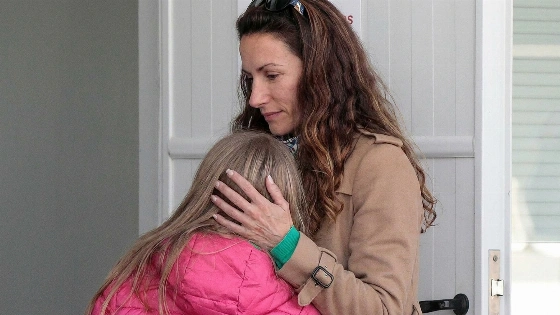
Tana Rivera, daughter of Eugenia Martínez de Irujo and Francisco Rivera, navigates intense public scrutiny as she seeks her own identity. Her story highlights the challenges of growing up in Spain's most prominent families.
Tana Rivera, daughter of Eugenia Martínez de Irujo and Francisco Rivera, has spent her entire life under the Spanish media spotlight. From childhood, her every move has been observed and compared, not for her own actions, but because of the weight of her family name. Now, as she steps further into adulthood, Rivera is increasingly visible at public events and collaborations, signaling a shift from being known solely as "the daughter of" to forging her own public image.
This transition is not without its challenges. According to psychologist Leticia Martín Enjuto, interviewed by Lecturas, individuals born into high-profile families often face unique emotional pressures. Their identities are shaped not just by personal experience, but by a legacy that predates their own choices. For Rivera, whose lineage includes the renowned Duquesa de Alba, the expectations and attention have always been intense and often disconnected from her personal achievements.
As Rivera's relationship with bullfighter Andrés Roca Rey draws public attention, comparisons to her parents' and grandparents' high-profile romances have become inevitable. Martín Enjuto warns that such parallels, while understandable, can be misleading. Each relationship, she notes, is built on its own dynamics and decisions, and repeating family patterns is not a given. The psychologist emphasizes that while family models influence early understanding of relationships and conflict, they do not dictate the future paths of individuals.
One of the most significant hurdles for those in Rivera's position is balancing the inherited legacy with the pursuit of a distinct personal project. Martín Enjuto points out that it is nearly impossible to completely separate from a surname that is of public interest. However, she suggests that integrating this heritage into one's identity—without letting it dominate—can help achieve a healthier balance. This process, she says, allows individuals to take greater control over how they present themselves to the world.
External pressure is not limited to family expectations. The broader public, especially in families with a strong public narrative, often projects its own hopes and judgments onto the next generation. Martín Enjuto highlights the importance of distinguishing between self-esteem and external opinion, a skill that becomes crucial for those constantly in the public eye. The rise of social media has added another layer, enabling figures like Rivera to curate their own communities and decide what aspects of their lives to share.
The phenomenon of growing up in the shadow of famous parents is not unique to Rivera. Similar themes have been explored in other Spanish media stories, such as the challenges faced by public figures' children in balancing privacy and public expectation. For example, the experience of Julia Otero's daughter, who candidly commented on her mother's television career, was recently discussed in a feature about the private side of public life.
Spain's fascination with prominent family sagas is deeply rooted in its social and cultural landscape. The country's media has long followed the lives of aristocratic and celebrity families, often blurring the line between personal development and inherited narrative. For many, the journey to self-definition is complicated by the constant presence of cameras and public commentary. Rivera's story, as highlighted by Lecturas, is a current example of how young adults in Spain's most visible families must navigate inherited expectations while striving to define themselves on their own terms.
Understanding the pressures faced by individuals like Rivera offers insight into broader questions about identity, legacy, and the role of media in shaping public perception. As Spain continues to debate the boundaries between private life and public interest, the experiences of those at the center of these stories remain a focal point for discussion and reflection.