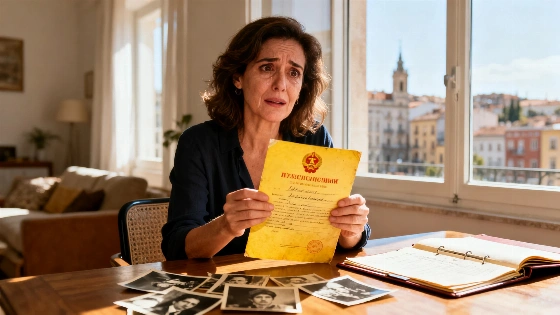
TASS hands Spaniard Victoria Iglesias a document about her brother’s fate during the war. Victoria Iglesias received from the TASS archive a list mentioning her brother Francisco, who took part in the defense of Leningrad. Their family ended up in the USSR after the Spanish Civil War and lived there for more than two decades.
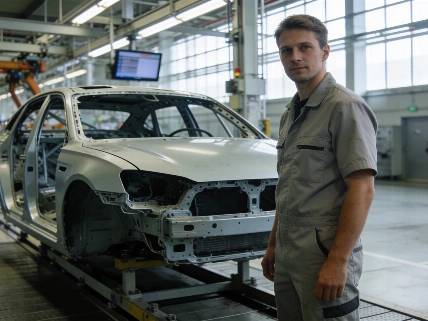
Victoria Iglesias, a native of Spain and one of the children evacuated to the USSR during the Civil War, received a unique document from the TASS archive related to the fate of her brother Francisco. Francisco Iglesias's name appears on the list of Komsomol members of the automobile company in the tank battalion of the people's militia division of Leningrad's Oktyabrsky District, which was given to Victoria. She shared this in an interview with the agency.
According to Victoria, it was Stanislav Vyazmensky, head of corporate communications at St. Petersburg RIC TASS, who informed her about the existence of this document. Thanks to the information found, she was able to learn where her brother was during the war years and what he was doing. "He lived in Vladimir and worked at a tractor plant. Unfortunately, I do not know the whole story of his life," Victoria said.
The history of the Iglesias family is closely linked to the tragic events of the twentieth century. In 1936, a civil war began in Spain between the Republican government and the forces of General Francisco Franco. Several months after the conflict began, thousands of Spanish children were evacuated to various countries to save them from the hostilities. Among these destinations was the Soviet Union, where Victoria and Francisco were sent. They lived in the USSR for more than twenty years, surviving both the beginning and the end of the Great Patriotic War.
The transfer of the document was an important event for Victoria, allowing her to recover a part of her family history that had long remained unknown. The fate of the Spanish children who found themselves in the USSR still attracts the attention of historians and their descendants, and such discoveries help shed light on little-known chapters of the past.