Castile and León authorities step up fire measures without raising risk level. Castile and León is implementing emergency measures in response to the threat of wildfires, but the official risk level remains unchanged. The reason is a shortage of firefighters. The regional center has launched its wildfire response campaign earlier than usual.
In Castile and León, emergency measures have been declared to prevent forest fires following an unfavorable weather forecast, but the official risk level in the region has not been raised. According to fire service representatives, authorities are unable to mobilize additional resources due to a shortage of regular staff. This decision has drawn criticism from fire crews, who point to a mismatch between available resources and the actual threat.
From May 22 to 29, the region is expected to see high temperatures, dry southern winds, and thunderstorms with lightning, which, according to the environmental department, sharply increases the likelihood of major fire outbreaks. In some areas, especially in the center and south, the danger level is assessed as extreme. Despite this, the authorities have limited their response to stepped-up monitoring and faster reaction times, stopping short of officially declaring a high-risk situation, which would enable the deployment of more personnel and equipment.
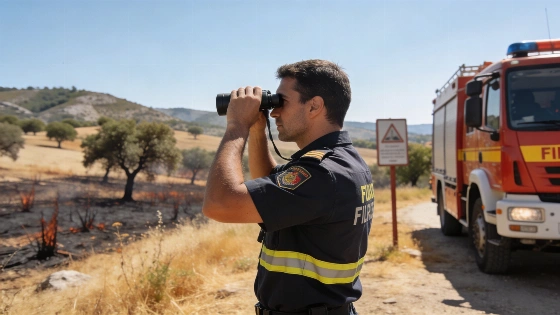
Among the measures taken are: placing observation posts and mobile teams on maximum alert, prioritizing rapid response to the first signs of smoke, fast-tracking the use of aircraft, and increasing control over harvest activities near forests. However, firefighters emphasize that in some provinces, such as Segovia, there is no fully operational observer network, and the surveillance cameras that were previously proposed are still not working.
The problem is compounded by the fact that, according to regulations, the high-risk period in Castile and León officially runs only from June 12 to October 12. Outside of this period, additional measures require a separate order, but as members of fire services claim, declaring a high risk right now is impossible due to staff shortages. According to them, if the risk level were raised, more personnel would be needed who simply aren't available.
Amid these restrictions, Spain's central government has decided to launch the national wildfire campaign starting June 1, as was the case in 2025 after record losses. Under this decision, federal fire crews, aviation, as well as forces from the Civil Guard and National Police have been mobilized. Last year, the country lost 355,000 hectares of forest to wildfires, with 144,000 of those in Castile and León—making it one of the most severe wildfire seasons in recent decades.
Regional authorities had previously promised to increase funding and expand the fire department staff, but according to unions, no significant changes have occurred by summer 2026. Experts link the high risk of renewed large-scale fires to abundant vegetation after a rainy winter and the early onset of heat. The question of service readiness for new challenges remains open, especially amid complaints about a lack of resources and outdated infrastructure.
The issue of safety and emergency preparedness is becoming increasingly relevant for Spain's regions. Other parts of the country are also seeing cases where staff or equipment shortages affect the efficiency of response efforts. For example, a recent extreme marathon race in the Basque Country forced participants to face harsh weather conditions and organizational challenges — more on this can be found in the article about the race in Zegama.
According to RUSSPAIN, the situation in Castile and León reflects a nationwide problem: despite efforts by central authorities, regional emergency services often face staffing and technical limitations. Amid a rise in extreme weather events, the modernization of fire protection systems and expanding personnel remain key issues for public safety.