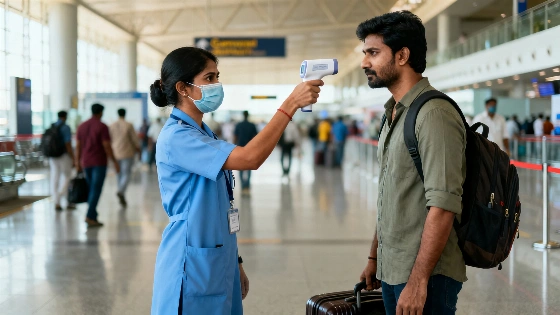
Andhra Pradesh Authorities Tighten Checks Due to Ebola Virus Threat. Andhra Pradesh has launched mass screenings of passengers following an Ebola virus outbreak. Special attention is being given to flights from Singapore and to pilgrims. Authorities are preparing isolation facilities in case of suspicious symptoms.
Authorities in the Indian state of Andhra Pradesh have significantly tightened health controls at Gannavaram International Airport amid growing concerns over the spread of the Ebola virus. According to NDTV, in recent weeks all passengers arriving from abroad undergo mandatory medical screening. Special attention is given to flights from Singapore, which arrive three times a week—on Tuesdays, Thursdays, and Saturdays. On the most recent flight from Singapore alone, 127 people were screened.
Dr. Sujana, a representative of GGH Vijayawada hospital, reported that screenings have been ongoing for about three weeks. Special control procedures, including both night and day shifts, have been organized for pilgrims returning from Hajj. She stated that none of those examined so far have shown symptoms characteristic of Ebola. However, special isolation rooms have already been prepared at the airport should any suspected cases arise.
Indian authorities are acting in line with recommendations from the World Health Organization and the Africa Centers for Disease Control and Prevention. After Ebola outbreaks in the Democratic Republic of Congo and Uganda, and the official recognition of the situation as an emergency at both the international and continental levels, the central government of India has advised citizens to refrain from traveling to Congo, Uganda, and South Sudan unless absolutely necessary.
Temporary measures include enhanced screening at all entry points to identify and isolate passengers with fever or other suspicious symptoms, especially those arriving from regions where cases of the Bundibugyo strain of the Ebola virus have been reported. According to international organizations, countries bordering Congo and Uganda are considered to be at higher risk.
The Ebola virus, particularly its Bundibugyo strain, causes severe hemorrhagic fever with a high mortality rate. Currently, there are no approved vaccines or specific treatments for this variant of the virus. Ebola outbreaks in Africa regularly lead to stricter sanitary measures worldwide, especially in countries with heavy international air traffic. In India, similar screenings have previously been implemented in response to other dangerous infections, allowing for a rapid reaction to emerging threats.