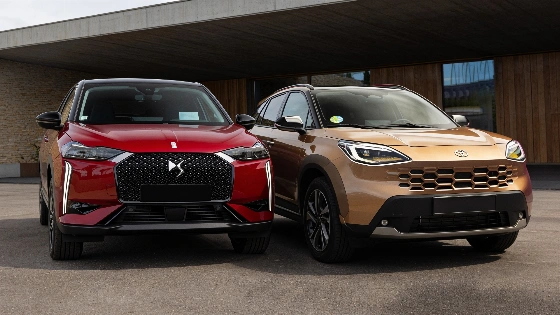
Toyota Yaris Cross and DS 3 target urban drivers with hybrid and electric options, but their strategies and price points set them apart. Here’s how these two compact SUVs compare on space, efficiency, and value.
Choosing between the Toyota Yaris Cross and the DS 3 means weighing two sharply different visions for the urban SUV. Both models compete for attention in Spain’s crowded B-segment, but their priorities and price tags reveal a clear divide.
The Toyota Yaris Cross leans on practicality and efficiency, offering a single self-charging hybrid powertrain that balances fuel economy with accessible pricing. In contrast, the DS 3 aims for a more premium experience, with refined styling, a richer equipment list, and the option of a fully electric version for those seeking zero-emission driving.
Dimensions and Space
While both vehicles fit squarely in the compact SUV category, the Toyota Yaris Cross is marginally larger, measuring 4,180 mm in length, 1,765 mm in width, and 1,595 mm in height, with a 2,560 mm wheelbase. The DS 3 is slightly shorter and lower, at 4,118 mm long, 1,791 mm wide, and 1,534 mm high, with a 2,558 mm wheelbase. This translates into a practical advantage for Toyota when it comes to cargo: the Yaris Cross offers a 397-litre boot, outclassing the DS 3’s 350 litres—a difference that matters for daily usability in tight city spaces.
Powertrains and Efficiency
The Yaris Cross keeps things simple with a single hybrid setup: a 1.5-litre three-cylinder petrol engine paired with an electric motor, delivering a combined 130 hp and 185 Nm of torque. Buyers can choose between front-wheel drive and Toyota’s AWD-i all-wheel drive system. Official fuel consumption ranges from 4.5 to 4.8 l/100 km for the FWD, rising to 5.1 l/100 km with AWD.
The DS 3, meanwhile, offers more variety. Its 48-volt mild hybrid system combines a 1.2-litre turbocharged three-cylinder petrol engine (136 hp) with an integrated electric motor, producing a total of 145 hp. Power is sent to the front wheels via a six-speed automatic gearbox. The DS 3 accelerates from 0 to 100 km/h in 8.4 seconds, reaches 207 km/h, and claims a combined fuel consumption of 4.9 l/100 km with CO2 emissions of 112 g/km.
For those prioritizing zero emissions, the DS 3 E-TENSE stands out. This fully electric variant delivers 156 hp (115 kW) and 260 Nm of torque, sprinting from 0 to 100 km/h in 9 seconds and topping out at 150 km/h. Its 54 kWh battery (50.8 kWh usable) supports a WLTP range of up to 396 km, with an average consumption of 15.6 kWh/100 km.
Pricing and Equipment
The price gap between these two contenders is significant. The Toyota Yaris Cross starts at €27,500, while the DS 3 commands a premium, beginning at €33,562. This €6,000 difference reflects the DS 3’s upmarket positioning and richer standard features.
Entry-level Yaris Cross models (Business Plus trim) previously included 16-inch alloy wheels, a leather steering wheel, black roof rails, electrically adjustable and folding mirrors, a 9-inch touchscreen with Toyota Smart Connect, a 7-inch TFT instrument cluster, automatic climate control, and a rear-view camera. The latest equipment details are pending, but the essentials remain focused on value and practicality.
The DS 3’s base Pallas trim steps up with 17-inch alloys, automatic climate control, rear parking sensors, a 10.3-inch touchscreen with wireless Apple CarPlay and Android Auto, a digital instrument cluster, an eight-speaker audio system, and a comprehensive suite of driver aids, including emergency braking, traffic sign recognition, and lane keeping assist.
Which SUV Makes More Sense?
On paper, both models address similar needs for urban drivers, but the difference in brand philosophy and pricing is hard to ignore. The Toyota Yaris Cross delivers greater efficiency and a lower entry price, making it a compelling choice for those who prioritize running costs and practicality. The DS 3, however, appeals to buyers seeking a more exclusive feel and the flexibility of a fully electric option—something Toyota does not offer in this segment.
For those comparing electrified SUVs, it’s worth noting how the market is evolving. Models like the BYD Atto 2 are also challenging established players with strong range and value, as explored in this recent analysis of the electric SUV segment.
Ultimately, the choice between the Yaris Cross and DS 3 comes down to priorities: value and efficiency versus premium features and electric mobility. As Spain’s urban SUV market grows more sophisticated, buyers have more ways than ever to tailor their next car to their lifestyle and budget.