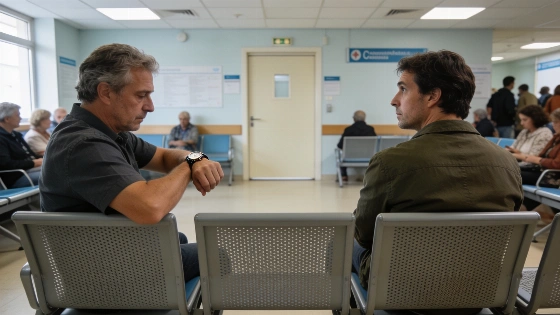
Catalonia’s average wait for a first specialist visit has risen to nearly 120 days. In Vallès, some hospitals now report delays of over 10 months. The shortage of doctors and an aging population drive the crisis.
Hospitals across Catalonia are facing a sharp rise in waiting times for first appointments with specialists, with the average delay now approaching 120 days—almost a month longer than three years ago. The situation is most severe in the Vallès region, where hospitals in Sabadell, Terrassa and Granollers have recorded some of the steepest increases in the entire autonomous community. At Parc Taulí in Sabadell, patients now wait an average of 314 days for a specialist, up from 212 days in mid-2023. This means some residents are waiting more than ten months for an initial consultation, far exceeding the 90-day reference limit set by the Generalitat.
The crisis is particularly acute in certain specialties. Urology at Parc Taulí now has a waiting time of 694 days—nearly two years—while traumatology patients face an average delay of 383 days. The number of people on the traumatology waiting list has nearly tripled since 2023, rising from 5,702 to 14,714. Otolaryngology has also seen delays jump from 184 to 327 days. Hospital management attributes part of this surge to issues with list registration, noting that some patients had remained on the list since 2019 and that a recent review has helped correct some distortions. The hospital claims it has increased its activity and expects to end the year without any patients waiting more than 14 months for a first visit.
Other major hospitals in Vallès are also struggling. At Hospital General de Granollers, the average wait has climbed from 105 to 189 days, while Hospital de Terrassa has seen delays rise from 125 to 186 days. These three hospitals now rank among the worst in Catalonia for waiting time increases. According to the CC OO union, two main factors are driving the problem: a shortage of specialists and a rapidly aging population. One in five Catalans is now 65 or older, and the over-80 age group is growing fastest, with a 3.4% annual increase, according to provisional Idescat data.
The Catalan government acknowledges the need to ease pressure on hospitals and is focusing on strengthening primary care as a solution. Plans include boosting the capacity of local health centers (CAP) to resolve more cases without referring patients to hospital specialists and expanding virtual consultations between primary care and specialist services. In the Barcelona metropolitan area, the picture is mixed. Sant Pau hospital has seen its average wait for a first visit rise by 32.8% (from 76 to 101 days), Vall d’Hebron by 8.8% (from 101 to 110 days), and Moisès Broggi-Hospitalet by 3.3% (from 84 to 87 days). In contrast, some major centers have managed to reduce delays: Clínic by 5.2% (from 72 to 69 days), Bellvitge by 10.8% (from 53 to 48 days), and Germans Trias by a notable 51.7% (from 123 to 59 days). Germans Trias attributes its improvement to new protocols with primary care and the replacement of some in-person visits with remote consultations.
Despite the worsening situation for first specialist appointments, waiting times for diagnostic tests have remained stable, averaging 79 days in 2026 compared to 82 days in 2023. The official maximum for routine tests is 90 days, and 30 days for urgent cases. Surgical waiting times have also seen only a moderate increase, with the average delay for scheduled operations rising from 76 to 85 days—a 12% jump. Reference times for surgery vary by priority: 90 days for urgent, 180 for medium, and 365 for low-priority cases.
Delays in Catalonia’s healthcare system are not limited to hospitals. Public services in other sectors have also faced criticism for slow response times and outdated infrastructure. For example, foreign visitors using the Rodalies train network in Barcelona have reported frequent delays and overcrowding, as highlighted in a recent report on transport challenges for tourists in Catalonia. These issues reflect broader strains on public services as the region’s population ages and demand for care rises.
Spain’s healthcare system is publicly funded and provides universal coverage, but regional management means that waiting times can vary widely. Catalonia, with its large and aging population, faces particular challenges in recruiting and retaining medical specialists. The Generalitat has made reducing waiting times a priority, but demographic trends and workforce shortages continue to put pressure on hospitals and clinics. As the population over 65 grows, the demand for specialist care is expected to remain high, making the search for effective solutions increasingly urgent.