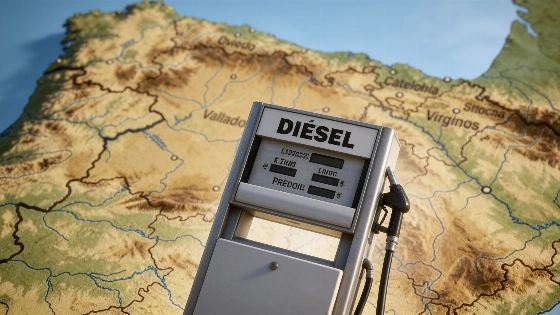
Diesel cars have lost favor in Spain’s big cities, but for millions outside strict low-emission zones, they remain a smart, cost-effective choice. Here’s why diesel still matters for the used car market—and who should consider it.
In Spain’s used car market, diesel vehicles have quietly become one of the most practical options for buyers who don’t live or work in the heart of major cities. While Madrid and Barcelona have imposed broad low-emission zones (Zonas de Bajas Emisiones, or ZBE), the reality is that most Spanish municipalities either have minimal restrictions or none at all. For drivers outside these urban cores, the stigma around diesel is often misplaced—and the savings can be substantial.
Spain’s climate law requires all cities with more than 50,000 residents to establish a ZBE, but implementation has been patchy. In many provincial capitals and medium-sized towns, the restricted areas are limited to a handful of central streets, or the rules have yet to be enforced. For the vast majority of residents in these places, daily driving is unaffected by the new regulations. Even more, those living in towns below the 50,000-inhabitant threshold face no ZBE restrictions whatsoever.
Not all diesel cars are equally impacted by environmental rules. Vehicles registered from September 2015 onward meet Euro 6 standards and carry the DGT’s C label, granting them access to most ZBEs currently in force. Even many Euro 5 diesels, registered from 2014 and marked with the B label, can enter the majority of low-emission zones. For buyers in areas without ZBE enforcement, even older diesels without an environmental sticker remain a valid and legal choice.
One of the strongest arguments for diesel is price. As demand for diesel models has dropped, their value on the second-hand market has fallen sharply. It’s common to find diesel versions of the same model selling for thousands of euros less than their petrol or hybrid counterparts. This depreciation works in favor of buyers, who can often afford a newer, better-equipped, or lower-mileage vehicle for the same budget. With used car prices rising across Spain, this price gap is more relevant than ever.
Diesel engines also offer clear advantages for those who drive long distances. They typically consume 15–25% less fuel than equivalent petrol models and deliver greater range between fill-ups. After a period of price volatility linked to international tensions, diesel fuel is once again cheaper than petrol in Spain. For high-mileage drivers, the savings add up quickly.
Another benefit is the sheer availability of used diesel cars. For over a decade, diesel dominated new car sales in Spain, so the second-hand market is flooded with options. This abundance makes it easier to find reliable models, access spare parts, and compare deals. Buyers can also draw on years of owner experience to identify which models are most dependable.
Before ruling out diesel, it’s worth considering your real-world driving patterns. If most of your journeys take place outside the largest ZBEs and you cover more than 15,000–20,000 kilometers per year, a used diesel remains a logical and economical choice. As noted in recent coverage of Spain’s evolving car market, including the impact of new incentives for electric vehicles (how the CAE can cut costs for EV buyers), the landscape is changing—but diesel’s value proposition is far from obsolete.
Looking ahead, it’s important to track local regulations, as some cities may tighten restrictions in the coming years. However, for now, diesel’s combination of affordability, efficiency, and widespread availability keeps it firmly in the running for Spain’s used car buyers—especially those outside the country’s strictest urban zones.