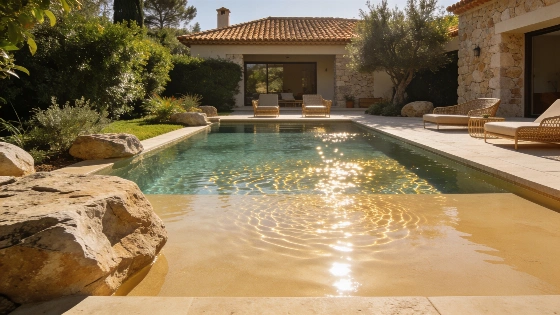
Architects Jorge and Pablo Piedra are leading a shift away from classic blue-tiled pools, favoring beige, cream, and grey finishes that better harmonize with gardens and natural surroundings. Their approach is changing how pools are designed and perceived in Spanish homes.
When Jorge and Pablo Piedra look at the typical blue-tiled swimming pool, they see a missed opportunity. For years, this standard design has dominated Spanish gardens, but the architect and engineer duo believe it’s time for a change. Their message is clear: the pool should be a central part of the home’s design, not an afterthought.
According to Jorge and Pablo Piedra, the problem isn’t the color blue itself, nor the classic rectangular shape. It’s the habit of defaulting to the same formula—blue tiles, standard shapes—without considering how the pool fits into the broader landscape. Too often, pools are planned only after the house, terrace, and garden are already decided, resulting in a visual disconnect between the water and its surroundings.
Rethinking Pool Design
“The pool is the most visible feature in any outdoor space, yet it’s usually the last thing people think about,” says Jorge Piedra. He argues that integrating the pool from the earliest stages of a project can transform not just the look, but also the way the garden is used during the hottest months. Factors like size, orientation, access, and depth all play a role in how the space functions and feels.
Beyond Blue: The Rise of Beige and Cream
One of the most striking shifts the Piedra brothers advocate is moving away from the traditional blue pool bottom. Instead, they recommend beige, sand, or cream finishes. These lighter tones soften the appearance of the water, making it look cleaner and more transparent, especially in gardens surrounded by natural stone, greenery, or earthy colors. The effect is subtle but powerful: the pool becomes a gentle sheet of water that blends into the landscape, rather than a bold blue statement that competes with its environment.
“There are so many possibilities beyond the typical blue tile,” they explain. “With beige or cream finishes, the water loses that intense blue and takes on a more natural, inviting look.” This visual change is purely aesthetic—the water’s hygiene and maintenance remain the same—but it can dramatically alter the atmosphere of a garden, particularly in rural or Mediterranean settings.
Grey Finishes and New Shapes
Grey pool bottoms are another favorite of the Piedra brothers. This choice gives the water a deeper, more natural tone, which pairs well with materials like stone, wood, and lush vegetation. The final effect depends not only on color, but also on factors such as depth, sunlight, and shadow throughout the day. That’s why they recommend considering the pool’s finish alongside the rest of the exterior design.
Shape matters, too. Jorge and Pablo Piedra encourage clients to move beyond rectangles. Curved pools can follow the organic lines of a garden, while long, narrow designs can echo the architecture of a linear house. Features like wide steps, submerged benches, or shallow lounging areas can further personalize the space and enhance its usability.
Integration Over Imitation
For these professionals, a pool should never feel like an add-on. When it’s integrated with the home’s pathways, views, terrace, and materials, the entire outdoor area gains coherence and character. The shift away from blue tiles is not just about color—it’s about reimagining the pool as an essential, harmonious part of the living environment.
As Spanish homeowners increasingly seek outdoor spaces that feel both modern and connected to nature, the trend toward beige, cream, and grey pools is likely to grow. According to Talent24h, this approach is already influencing new projects across the country, signaling a broader move toward thoughtful, landscape-driven design.