Spanish kitchen design is undergoing a quiet revolution. Designers are concealing fridges and other appliances behind cabinetry, blending kitchens into living spaces and changing how homes look and feel. Here’s what’s driving the shift.
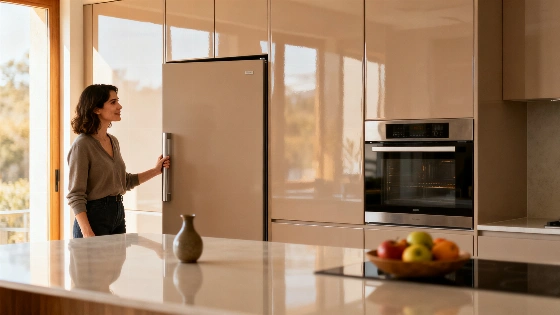
Walk into a newly designed Spanish home and you might not spot the fridge at all. Instead, what looks like a seamless wall of cabinetry often hides the kitchen’s largest appliance. This is no accident: interior designers are now prioritizing integration, aiming to erase the visual boundaries between kitchen and living areas.
Alberto Rando, kitchen designer at Natural Wood, notes that the traditional kitchen is being reimagined. “The trend is for kitchens to look less like kitchens and more like furniture,” he explains. This shift began with dishwashers and washing machines tucked under countertops. Now, the fridge—once a dominant feature—is concealed behind custom doors, preserving a unified look.
Blending Spaces
The goal is clear: fewer visible appliances, more visual harmony. Ovens and microwaves are often hidden in tall units with retractable doors, extractor hoods are built into cabinetry, and countertops take center stage. The familiar sight of travel magnets on the fridge door is quietly disappearing as the appliance itself vanishes from view.
Warm Colors and Eclectic Styles
This move toward integration is part of a broader evolution in kitchen aesthetics. While Scandinavian-inspired pale woods and light tones have long dominated, designers are now embracing earthier shades—taupe, sand, and even bold color combinations. Rando points to projects mixing green, taupe, and light wood for a more eclectic feel. Classic kitchens with decorative moldings are also in demand, though they often come with a higher price tag.
What unites these varied styles is a meticulous attention to detail. Whether the look is warm, minimalist, or traditional, the emphasis is on creating a space that feels curated and intentional.
Black Appliances and Breakfast Nooks
Another hallmark of the current trend is the use of black appliances. According to Rando, around 90% of new kitchens feature black elements—lighting, switches, and especially appliances. Architect María Arilla links this to the growing popularity of open-plan living, where the kitchen is visible from the main living area. In these spaces, even the fridge door is engineered to open in sync with the cabinetry, thanks to specialized hinges.
Breakfast nooks, or “desayunadores,” are also gaining ground. These dedicated corners for coffee makers and toasters can be left open or hidden behind sliding doors, but the preference is for a tidy, uncluttered look.
As Spanish homes continue to evolve, the kitchen is no longer just a place to cook—it’s a carefully designed extension of the living space. The trend toward hidden appliances reflects a broader desire for order, calm, and visual continuity at the heart of the home.