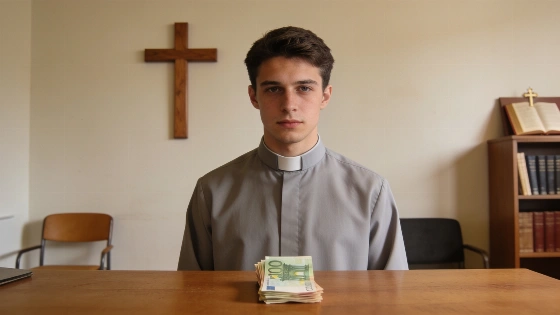
Juan Orduña, a 27-year-old priest in Madrid, says his monthly income is below Spain’s minimum wage. With housing and utilities covered by the Church, he describes a simple lifestyle, full-time commitment, and how he makes ends meet without financial stress.
Juan Orduña, a 27-year-old priest serving in Madrid, has drawn attention by openly discussing his salary and daily life as a young member of the clergy. Despite his full-time commitment to his parish, Orduña says his monthly income falls short of Spain’s minimum wage, yet he manages to live comfortably thanks to the support provided by the Church.
During an interview on the podcast La Pera de Jobs, Orduña explained that his monthly pay is "less than €1,200," a figure that does not reach the official minimum wage set for 2026. According to the latest regulations, Spain’s minimum wage stands at €1,221 gross per month, paid over 14 installments, totaling €17,094 annually for a full-time position. Orduña did not specify whether his salary is distributed over 12 or 14 payments, but confirmed it remains below the legal threshold.
Living Expenses Covered
One of the key factors that allows Orduña to manage on a modest income is the Church’s provision of housing and basic utilities. He does not pay rent, electricity, or water bills, which are typically major expenses for young people living independently in Madrid. This arrangement frees up his salary for food, transportation, and personal needs. However, he notes that fuel costs for his car are his own responsibility.
Orduña says that, even after deductions for his future pension, his income is sufficient for his needs. He is able to dine out occasionally and invite friends without financial strain, though he emphasizes that his lifestyle is simple and far from luxurious.
Full-Time Commitment
The demands of priesthood extend beyond a typical workweek. Orduña describes his role as a "24/7" commitment, reflecting the constant availability expected of parish priests. Despite this, he is entitled to 30 days of annual vacation, plus an additional week dedicated to spiritual retreats—time set aside for prayer and reflection, rather than leisure.
Early Calling and Motivation
Orduña’s path to priesthood began long before his ordination at Madrid’s Almudena Cathedral on May 24, 2025, when he was 26. The ceremony, led by Cardinal José Cobo, welcomed several young priests into the Archdiocese of Madrid. According to Church records, Orduña had aspired to become a priest since childhood, viewing the vocation as a form of service rather than a career choice driven by financial reward.
Context: Church Support and Social Realities
For many young Spaniards, the cost of living—especially in major cities—makes financial independence challenging. Orduña’s experience highlights how the Church’s support structure can offset low salaries, providing stability in exchange for a life of service and availability. While his income is modest, the absence of rent and utility bills significantly alters his financial reality compared to peers outside the clergy.
As Spain’s minimum wage continues to rise, the gap between official earnings and the practical cost of living remains a topic of debate. Orduña’s story offers a rare glimpse into the economic realities of young priests, where vocation and institutional support shape a unique approach to work and daily life.