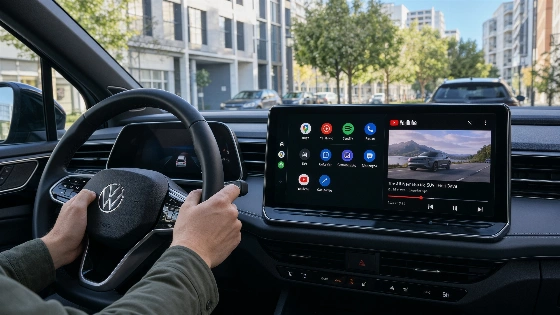
YouTube is now available on Android Auto dashboards, but video playback only works when the car isn’t moving. Google’s update targets electric vehicle drivers during charging stops, aiming to balance entertainment and safety.
Google has added YouTube to Android Auto, but with a clear rule: you can only watch videos when the car is parked. This isn’t just a technical limitation—it’s a safety measure, and it lines up with legal requirements in many countries.
Until now, people who wanted to watch YouTube in their cars had to use unofficial apps like Fermata. With this update, Android Auto users get a built-in option that plays videos in up to FullHD at 60 frames per second. There’s no need for extra downloads or workarounds.
The rollout of YouTube for Android Auto is happening gradually, depending on the version, car compatibility, and region, so not all users will see the feature at the same time.
The timing isn’t random. As electric vehicles become more common, charging stops often last 20 to 30 minutes. Google’s move gives drivers and passengers something to do during these breaks, letting them watch videos or listen to podcasts through the car’s speakers. The system is set up so that the video feed stops as soon as the car starts moving. If the app allows, audio can keep playing, but the screen goes dark to avoid distractions.
This setup isn’t just about company policy. Spanish law, for example, bans the use of internet-connected screens or video players while driving. Google’s approach makes sure Android Auto can’t be used in ways that break these rules. The app itself blocks video playback on the move, so there’s no easy way to get around the restriction. Reports from La Sexta and 20minutos confirm that this limitation is a direct response to legal and safety concerns.
As car dashboards become more advanced, the line between convenience and safety gets sharper. Google’s answer is simple: you can watch videos, but only when the car is stopped. This isn’t a half-step—it’s a clear response to both the law and the realities of driving today.
The demand for in-car video is especially high among electric vehicle owners, as charging sessions often require waiting periods of 20–30 minutes. This context has made the parking-only video mode particularly relevant, according to recent Spanish automotive media.
According to Google/SpainAuto, the integration is fully native and doesn’t require extra setup. The system’s automatic lockout when the car moves isn’t just a technical detail—it shows where Google’s priorities lie. You can watch content during breaks, but once you start driving, the screen switches back to navigation and essentials.
For people who spend a lot of time waiting in their cars—especially electric vehicle owners—this update is a practical improvement. It also sets a standard for how in-car entertainment should work: safety comes first. With this change, Google signals that the days of relying on unofficial apps are over, at least for those who want both convenience and to follow the rules.