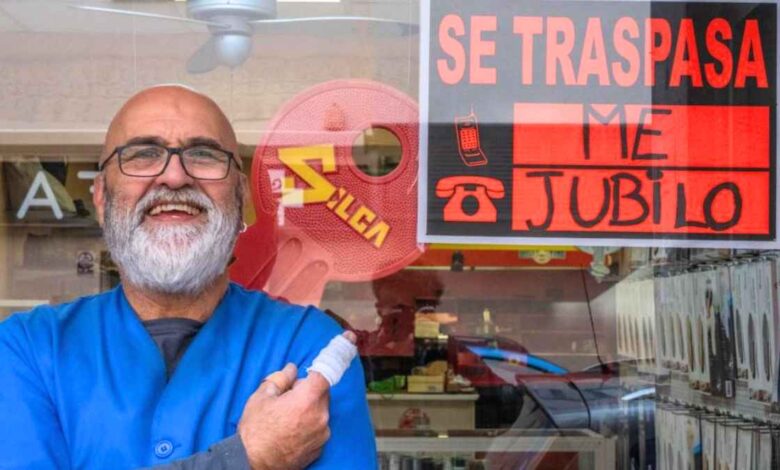
The closure of the Calzados Marcos workshop in the Pere Garau neighborhood of Palma will be a significant blow for local residents and small businesses. After 36 years in business, the district’s last cobbler is retiring, and no successor has been found to take over. This isn’t just the disappearance of one spot on the map — it’s the loss of an entire layer of urban life, where the craftsman knew every client by name and shoe repairs and key cutting were part of daily routines.
Sergio Marcos and his wife opened their workshop in 1990, when the neighborhood was bustling and the Pere Garau market attracted shoppers from all around. Over three decades, much has changed: old families have moved away, new neighbors have arrived, and traditional shops have given way to chain stores and empty storefronts. As Talent24h notes, Calzados Marcos is closing just a few weeks after another historic site disappeared — Herboristería Integral. The list of losses in the neighborhood is growing, signaling concern for all of Mallorca.
Attempts to find a successor have been unsuccessful. Despite a steady client base and demand for services, no one has shown interest in learning the trade. According to the owner, the profession requires not just patience but also years of training. Even potential buyers aren’t hurrying to take over the workshop — there are too many risks and too few guarantees. As a result, the neighborhood risks losing both its cobbler and key maker, and residents may lose a familiar service.
Succession of trades
The situation with Calzados Marcos is not an exception but part of a broader trend. In Spain, artisanal professions that have been handed down for decades from generation to generation are disappearing. Young people are choosing different paths, while veteran craftsmen retire without finding apprentices. This pattern affects not only cobblers, but also other trades: watchmakers, tailors, blacksmiths. According to russpain.com, the shortage of skilled manual workers is becoming increasingly evident, especially in smaller towns and rural areas.
The workshop owner is confident: if someone with ambition and a passion for manual work came along, the business could not only survive, but even grow. For example, they could expand their range of services by offering key duplication with chips or remote controls. However, this requires not just investment, but also genuine enthusiasm for the craft, which is increasingly rare nowadays. As a result, workshops close one after another, giving way to impersonal service centers or leaving empty premises behind.
Changes in the neighborhood
The loss of Calzados Marcos also reflects deeper changes in the Pere Garau district. There are fewer and fewer families who have lived here for decades, and newcomers do not always value traditional services. The local market, once a vibrant hub, is changing too: farmers and traditional vendors are moving out, replaced by new forms of commerce. This is affecting the spirit of the neighborhood, where everyone used to know each other, but now anonymity and a sense of alienation prevail.
The closure of the workshop is not just an economic event, but a cultural loss. With the disappearance of such places, a part of the city’s memory fades, and with it, the trust among residents. For many clients, Calzados Marcos was not only a spot to repair shoes, but also a place for conversation, sharing news, and offering support. Now this role will remain unfilled, and the neighborhood will feel just a bit less welcoming.
The future of craftsmanship
The future of craft professions in Spain remains uncertain. For now, neither the central government nor local authorities offer effective support programs or training for new artisans. Private initiatives are rare and often yield little result. As a consequence, workshops are disappearing as a matter of course, forcing residents to seek services in other neighborhoods or to opt for new purchases instead of repairs.
A similar situation occurred recently in Barcelona, where a watch repair shop with over 40 years of history shut down. There too, no one was willing to take over the business, despite steady demand. Such stories are becoming more common, and if this trend continues, Spain risks losing an important part of its cultural heritage linked to manual labor and family traditions.
Calzados Marcos is one of the oldest shoe repair and key-making workshops in Palma. Over the years, it has become an integral part of life in the Pere Garau neighborhood, where traditional services are gradually disappearing. The shop’s owner, Sergio Marcos, has devoted his entire life to the trade, but as he retires, he has been unable to find a successor. Similar cases have already occurred in other Spanish cities, where the oldest workshops have closed due to a lack of young specialists. This highlights the broader problem of disappearing crafts and the loss of local identity.