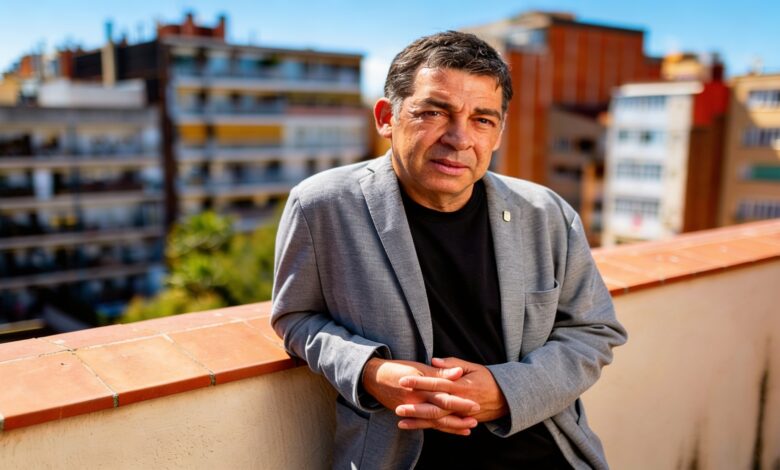
In Barcelona, the municipal ombudsman — Síndic de les Persones, David Bondia — has become a key figure in resolving urban crises through mediation in recent years. His approach has helped halt evictions, establish dialogue between residents and investors, and organize unique support measures for victims of violence in municipal institutions.
Mediation Instead of Conflict
Bondia, an international law specialist, deliberately avoids the term ‘conflict,’ preferring to speak of ‘problems’ that require a search for balance rather than winners and losers. According to him, effective solutions are only possible if the city authorities agree to participate in the process, since the ombudsman has no authority to intervene in disputes between private individuals.
Among recent cases was the intervention in the situation around the Casa Papallona building in Eixample, where two residents faced eviction initiated by the investor NAD. After negotiations with the owner and the municipality, a three-month reprieve was achieved. Previously, a similar approach helped stop evictions at the famous Casa Orsola, as well as resolve relocation issues for families in the Vallcarca neighborhood.
Real Change for Residents
Mediation is used not only in high-profile cases. For example, the ombudsman helped settle disputes between neighbors and a school over courtyard noise, and also intervened when the municipal cemetery service moved the remains of a deceased person to a common vault without proper notification. In this case, the family valued not so much the compensation as the involvement of a forensic anthropologist to search for the remains and the recognition of responsibility by the city.
Special attention is given to supporting victims of sexual violence in municipal institutions. To this end, a special Reparations Commission was created, where victims can talk about the consequences they have experienced. Within the commission’s work, public events were organized with the participation of school, city hall, the Catalan government, and even FC Barcelona, where officials offered apologies to the victims.
Dialogue as a tool for change
According to Bondia, the success of mediation largely depends on the atmosphere: it is important to create conditions where the parties feel safe and ready for dialogue. In complex cases, as with Casa Orsola, talks were held even on weekends, and the outcome was not only stopping the evictions, but also transferring the building to the management of the city and the Habitat 3 foundation to house vulnerable families.
Barcelona’s experience shows that even in the most acute situations, the parties often find common ground more frequently than it might seem at first glance. This approach is different from the use of forceful solutions recently reported in the incident involving a detention in the center of Girona, where the conflict was resolved by the police.
Context and perspectives
The municipality notes that mediation is becoming an increasingly in-demand tool for solving urban problems. According to Bondia, even if the outcome does not satisfy everyone, it is important that the parties are heard and receive moral satisfaction. His work is inspired by the philosopher José Antonio Marina’s ‘Historia universal de las soluciones,’ which emphasizes the value of seeking solutions instead of escalating conflicts.