A conflict is brewing in Catalonia over the government’s pilot project to introduce ‘mossos’ officers into educational institutions. Four schools—three in Vic and one in L’Hospitalet—have officially requested to withdraw from the program, which launches this week. The decision came after votes held at teaching staff meetings, where most teachers stated they saw no grounds for a permanent police presence in their schools.
The plan, initiated by the Generalitat’s Department of Education, called for the placement of six ‘mossos’ officers in 14 educational institutions, including several primary schools. According to the authorities, the police would work without uniforms or weapons, helping to prevent conflicts and facilitate mediation. However, in a number of schools, the project met with sharp resistance: teachers are convinced that their schools are not problematic and that the initiative was imposed from above.
Teachers’ response and the vote
In Vic, three high schools—La Plana, Jaume Callís, and Comtat d’Osona—almost unanimously voted to withdraw from the project. In L’Hospitalet, a similar decision was made at Margarita Xirgu school. Discussions are still ongoing in other schools, and it is possible the number of refusals may increase. According to teachers, the initiative was discussed during emergency staff meetings, where the majority expressed opposition. Teachers note that they were not given a real choice, and the decision to include them in the project was made without considering the collective’s opinion.
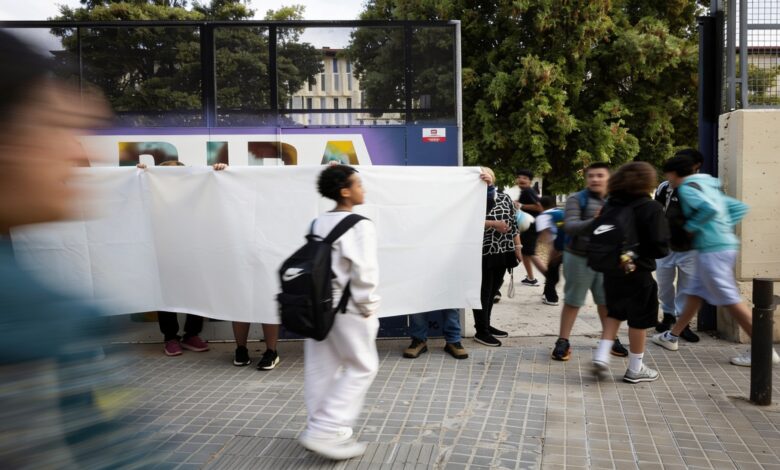
The Department of Education insists that participation in the program is voluntary and implemented at the request of school administrations. Minister Esther Niubó and President Salvador Illa have publicly emphasized that no one will be forced to accept the presence of ‘Mossos’ against their will. Nevertheless, according to educators, information about the project was sent to principals only after approval from the authorities, leaving staff already presented with a done deal. Protests took place in Vic and L’Hospitalet, and in the capital of Osona, teachers read out a statement demanding the hiring of more educational specialists instead of the introduction of police officers.
Authorities’ stance and next steps
Despite the schools’ statements, the Department of Education claims that it has not yet received any official requests to withdraw from the project. However, the administrations of the lyceums have already notified the inspection and territorial services, and the documents are expected to be submitted to the central office on Via Augusta in Barcelona. In some institutions, teachers emphasize that the formal withdrawal procedure is established: if a majority votes for refusal, the administration is required to pass the decision to higher authorities.
Teachers note that their schools do not have heightened levels of conflict, and the main issues are related to a lack of specialists in working with adolescents and supporting students with diverse needs. According to the educators, instead of police officers they need additional teachers, social integrators, and even medical professionals, since cases of anxiety and emotional difficulties are more common than serious incidents.
Context and similar situations
The situation with schools refusing to participate in the pilot project with the ‘mossos’ reflects a broader trend of resistance to controversial initiatives in education. Similar cases are being reported in other regions of Spain, where parents and educators are demanding that authorities reconsider measures related to student safety and support. For example, in Andalusia, families recently called for genuine changes for children with special educational needs, as discussed in the article about the protests of parents in Andalusia.