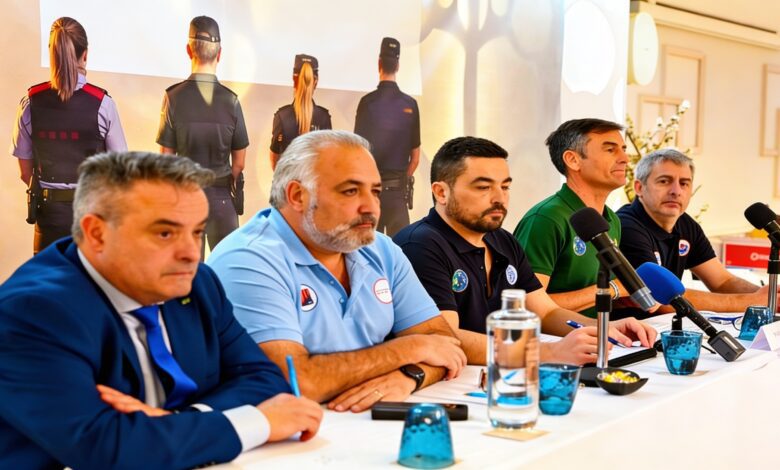
The planned mass appearance of National Police and Civil Guard officers in uniform at a church service in the Madrid cathedral on May 9 has been cancelled. The largest unions representing law enforcement agencies announced a postponement of the action after reaching an agreement with the Ministry of the Interior to launch a negotiation platform on key employment issues.
Pressure on the Ministry of the Interior
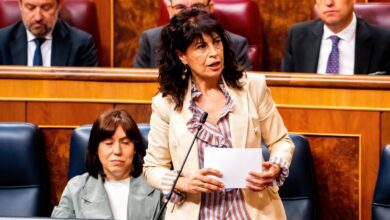
The Platform for a Decent Pension and Equal Pay, which unites the leading organizations from both forces — Sindicato Unificado de Policía (SUP), Sindicato Profesional de Policía (SPP), Asociación Unificada de Guardias Civiles (AUGC), Unión de Oficiales (UO), and Unión Federal de Policía (UFP) — confirmed that the decision was made after meeting with Security Secretary Aina Calvo. The parties agreed to begin discussions on retirement terms and recognition of the profession as dangerous.
In a statement, the unions emphasized that opening a dialogue with the department led by Fernando Grande-Marlaska is “a real step forward.” However, representatives of the platform warned that the postponement of the protest was merely a gesture of trust, and if negotiations do not yield concrete results within a reasonable time, all forms of pressure will be immediately resumed.
Change of Tactics
Other organizations not part of the platform, such as Justicia Policial (Jupol) and Justicia Guardia Civil (Jucil), have also joined the negotiations. This comes amid a noticeable decline in protest activity: the last demonstration in Madrid on April 18 gathered, according to the government delegation, around 4,500 people and did not generate significant political support. By comparison, similar previous actions attracted tens of thousands of participants and drew the attention of leaders from right-wing parties.
Under the restrictions that prohibit law enforcement officers from striking or participating in protests while in uniform, organizers sought new ways to draw attention to their demands. The plan was for thousands of employees to attend the worship service in uniform, but without weapons, to honor fallen colleagues and highlight the need to recognize the profession as dangerous. Aware of the risk of disciplinary actions, the organizers emphasized that the event would not feature any slogans or banners.
Historical context and consequences
The planned event was to follow the example of previous occasions when officers were allowed to appear in uniform at public ceremonies, such as the memorial in Barbate after the deaths of two Guards in 2024. However, unions also remember the experience of 2007, when, after a mass gathering of Guards in uniform at a protest in Madrid, disciplinary cases were opened against several dozen participants.
This time, organizers expected to gather up to 5,000 people, planning to transport participants by bus from all over the country. Until the event was canceled, platform representatives did not inform the cathedral administration about the mass visit, seeking to avoid premature intervention.
The issues of status and working conditions for law enforcement officers remain a topic of heated debate in Spain. As recent changes in union leadership in municipal councils have shown in other regions of the country, union activity continues to influence the political agenda — you can read more about this in the article on the appointment of new UGT representatives to the Ripoll council.