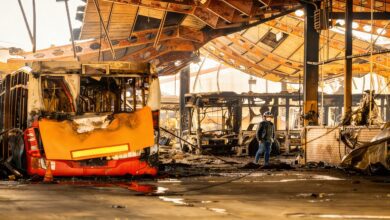
In the Valencian Community, after the devastating Dana storm, little attention has been paid to restoring schools. According to risk management expert Carmen Grau, the education system has become the most vulnerable link in the process of returning to normal life. She points out that there are still schools in the region operating in temporary facilities, and decisions about their future are being made in a fragmented way, without a unified strategy.
A failure in prevention culture
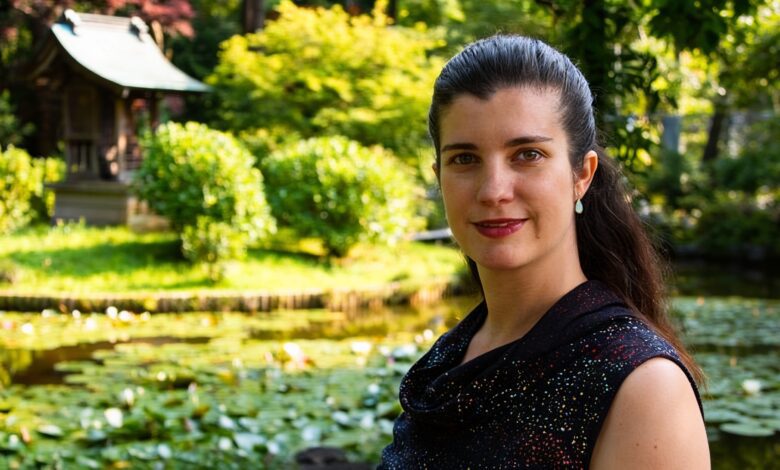
Carmen Grau, a researcher from Tavernes de la Valldigna, has spent many years studying how different countries respond to natural disasters. Her experience working in Japan, where she teaches at Senshu University and is involved in projects on sustainable risk management, demonstrates that the key to mitigating the consequences of disasters is systematic societal preparation. In Japan, children as young as three learn how to act during earthquakes and other threats, and schools regularly hold adapted drills. In Spain, however, according to Grau, risk culture is almost absent from the education process—protocols exist only for fires, not for floods or other regional hazards.
Risks of disaster recurrence
The expert emphasizes that restoring infrastructure without changing the approach to risks leads to repeated tragedies. In Valencia, she says, there are discussions about reconstruction projects for schools in areas where the likelihood of new floods remains high. Grau believes that without revising territorial planning and introducing a collective memory of past disasters, the region will continue to face the same problems. She notes that most people tend to underestimate the threat, and the lack of systematic education only reinforces this effect.
The gap between science and decision-making
According to Grau, one of the main problems is the gap between technical knowledge and actual management decisions. Information about the risks was available but did not become the basis for action. She also points to weak coordination among agencies and insufficient involvement of residents in the restoration processes. The formal posting of plans on websites does not replace real citizen participation. Grau is convinced that investing in education and training for the population is cheaper than dealing with the consequences of disasters, especially considering the growing threat of climate change, including heatwaves, which are becoming increasingly dangerous for the region.
Context and comparison
The problem of schools being insufficiently prepared for risks is not limited to Valencia. Other regions of Spain are also experiencing delays in implementing new educational programs and safety measures. For example, in Madrid, the launch of the school section exchange project has been postponed for a third consecutive year, reflecting a general trend of slow response to challenges in the education sector — read more about this in the article about the delayed launch of the Colegios Compartidos program.